From mechanical keys to intelligent card key ecosystems
The modern hotel card key is no longer a simple plastic token. It sits at the center of an access control ecosystem where every lock, every door, and every control system becomes a data point for IT directors. For hospitality businesses, this shift from metal key to programmable card radically changes how security, operations, and guest experience are orchestrated.
The first commercial use of key cards was in 1954 to raise and lower gates at automated parking lots. From that early card entry use case, Cardkey Systems in Simi Valley pioneered electronic access control and helped hotels move from mechanical locks to electronic locks. Cardkey Systems, based in Simi Valley, California, was the first company to develop and widely distribute electronic access control systems.
When Johnson Controls acquired Cardkey Systems, the hotel industry gained access to more integrated access control platforms. These platforms connected each hotel key, each card reader, and each door lock to centralized software. For CTOs, this created the foundations of a security architecture where every card key event could be logged, audited, and correlated with other hotel systems.
Today, hotels deploy a mix of magnetic stripe cards, RFID cards, and smart cards with embedded microchips. Each type of card key has different implications for security, price, and lifecycle management. IT leaders must therefore evaluate not only the card key technology, but also how cards, locks, and access control software integrate with PMS, CRM, and payment systems.
Behind every hotel rfid deployment, there is a strategic choice about risk, guest friction, and long term cost. A single key card now touches check in, housekeeping, spa access, and even loyalty recognition. The card key has become a strategic product rather than a simple operational tool.
Magnetic stripe, RFID and proximity cards : architecture choices for hotels
For hotel technology leaders, the debate between magnetic stripe and RFID cards is no longer purely technical. It is a question of aligning security, guest expectations, and total cost of ownership across the full portfolio of hotels. Each card key technology also shapes how easily hotels can integrate future AI driven services.
Magnetic stripe cards remain attractive because of their low cards price and wide availability of compatible locks. However, the magnetic stripe is vulnerable to demagnetization, cloning, and wear, which increases operational friction at the door. When a hotel key fails, the guest experience suffers and front desk teams must reissue a new key card or multiple key cards.
RFID cards and proximity cards offer contactless access, which guests now expect in modern hotels. An rfid key can be read through a wallet or bag, which reduces friction at the door lock and improves perceived security. For IT directors, rfid cards also support richer encryption and better integration with advanced access control systems.
Many hotel rfid deployments use rfid proximity technology to manage staff access to back of house areas. A single rfid hotel badge can control access to stock rooms, IT rooms, and small offices. These rfid cards can be configured centrally, allowing rapid changes to access rights when staff join, move roles, or leave the business.
Some hotels still rely on swipe cards with a magnetic stripe for legacy locks. In mixed estates, CTOs must manage both swipe cards and RFID key cards, ensuring that each control system remains secure. This hybrid reality complicates procurement, as cards shop contracts must cover both cards blank for printing and pre encoded card key formats.
AI ready access control : data, APIs and operational intelligence
Once every card key event is digitized, hotels can treat access data as a strategic asset. Each time a hotel key opens a door, the control system generates a timestamped event linked to a guest, staff member, or service provider. For innovation leaders, these events become raw material for AI models that optimize operations and security.
Modern access control platforms expose APIs that stream rfid key and key card events into data lakes. By correlating card entry logs with PMS data, hotels can identify abnormal patterns, such as repeated failed access attempts on a specific lock. AI models can then flag potential security incidents before they escalate, improving both security and guest trust.
In housekeeping, rfid hotel badges and staff proximity cards can be used to measure room servicing times. When a staff card key opens a door, the system records start and end times, enabling precise productivity analytics. For small and large businesses, this transforms the humble card into a sensor for operational performance.
Retail spaces inside hotels also benefit from integrated card key data. A guest can use a hotel key or even a credit card linked profile to access a gym, spa, or boutique shop. When the access control system and the cards shop POS platform share data, AI can generate targeted offers based on actual movement and spend.
For investors and software editors, the most promising products are those that unify locks, cards, and access control under a single control system. These platforms treat every lock, every door, and every card key as a node in a real time graph. This architecture is essential for future AI agents that will orchestrate energy, staffing, and security across entire hotel portfolios.
Security, compliance and risk management around card key systems
Security remains the primary reason hotels migrate from mechanical keys to electronic card key systems. A lost metal key requires changing a lock, while a lost hotel key card can be deactivated instantly in the control system. This fundamental difference reshapes how risk, compliance, and incident response are managed at scale.
With magnetic stripe cards, cloning and skimming remain significant threats, especially when stripe key data is poorly protected. Hotels must ensure that card entry encoders, readers, and locks use strong encryption and secure key management. For rfid cards and proximity cards, secure chip technologies and mutual authentication protocols are now standard expectations.
Access control logs generated by each card key event are critical for audits and investigations. When a door lock is forced or a stock room is compromised, security teams can review which key cards accessed the area. This level of traceability is impossible with traditional keys and is now a regulatory expectation in many jurisdictions.
Payment security adds another layer of complexity, as guests often associate their credit card with their hotel key at check in. Systems must ensure that card key identifiers and payment tokens remain logically separated, even if they are linked in the PMS. For IT directors, this means strict segmentation between access control networks and payment processing environments.
Vendors such as Cardkey Systems and later Johnson Controls helped define early best practices for electronic locks and control systems. Today, hotels must extend those practices to cloud based access control, mobile keys, and AI analytics. The objective is to maintain robust security while still enabling flexible offers, frictionless access, and personalized experiences.
Operational and commercial impacts : from stock management to guest offers
Beyond security, card key systems have deep operational and commercial implications for hotels. Every hotel key, every batch of cards blank, and every lock installed represents stock that must be managed. For multi property businesses, optimizing this stock can significantly reduce the total price of ownership.
Centralized procurement teams often negotiate cards price with a preferred cards shop or manufacturer. By standardizing on a limited set of rfid cards and magnetic stripe cards, hotels can simplify logistics and reduce waste. This also ensures that replacement key cards are always compatible with installed locks and access control software.
On the commercial side, the card key becomes a vector for personalized offers and ancillary revenue. A guest key card can grant tiered access to lounges, co working spaces, or partner businesses within the same building. When the control system recognizes a premium hotel key, it can automatically unlock additional doors and trigger tailored digital messaging.
In mixed use properties that combine hotel, office, and retail, a single rfid key can serve multiple roles. Staff proximity cards can open back of house doors, while guest cards manage access to rooms, gyms, and parking. This convergence of cards, locks, and access control simplifies the user journey and reduces friction across the entire site.
For startups and software editors, the opportunity lies in building products that connect card key data with CRM, loyalty, and revenue management. By analyzing when and where key cards are used, AI can infer intent and propose relevant offers. This transforms the humble card key into a dynamic instrument for both operational efficiency and revenue growth.
Future ready strategies : mobile keys, biometrics and hybrid access models
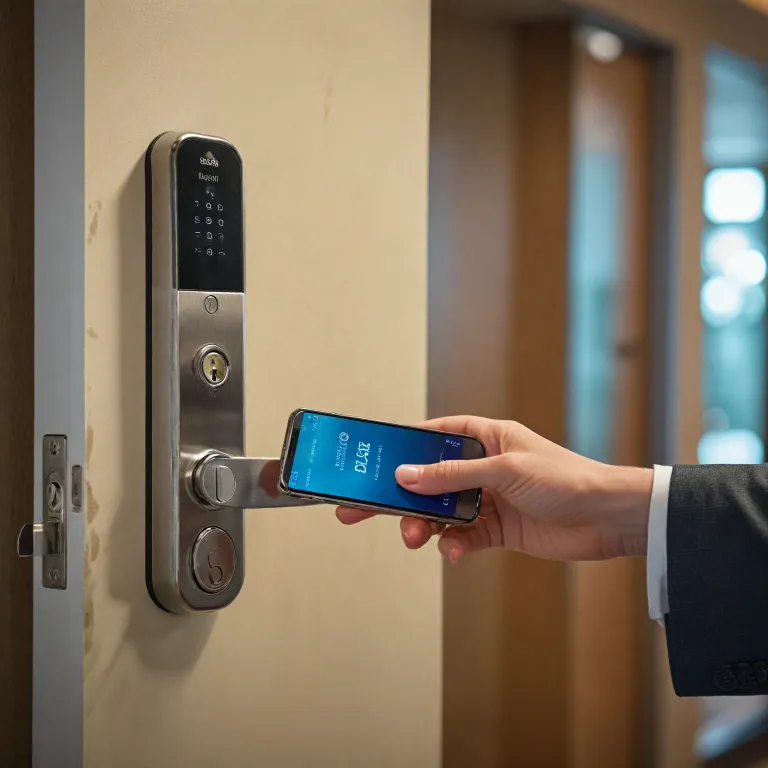
As hotels plan their next generation access strategies, the card key must coexist with mobile keys and biometrics. Guests increasingly expect to use their smartphone as a digital key card, yet physical cards remain essential for many scenarios. A resilient architecture therefore combines rfid hotel cards, mobile credentials, and selective biometric verification.
Hybrid models allow guests to choose between a traditional hotel key card and a mobile credential. Behind the scenes, both are treated as tokens within the same access control system, linked to the same profile. This approach preserves investments in existing locks while enabling gradual adoption of new technologies.
Biometrics will not replace cards entirely, but will complement card key systems in high security zones. For example, a staff rfid key might open a door, while a biometric check confirms identity for access to critical stock rooms. This layered approach balances convenience, security, and regulatory expectations.
For IT and innovation leaders, the priority is to ensure that every lock, every door, and every card key is addressable via open APIs. This enables integration with AI platforms that can analyze rfid cards usage, predict maintenance needs for locks, and optimize staffing. Vendors that still treat locks and cards as closed products will struggle to meet these expectations.
Ultimately, the evolution from simple key cards to intelligent access ecosystems reflects a broader digital transformation in hospitality. Hotels that treat the card key as a strategic asset, rather than a commodity, will unlock new efficiencies and guest value. Those that continue to view cards, locks, and access control as isolated components risk falling behind more agile competitors.
Key quantitative insights on card key and hotel access control
- First commercial use of key cards was recorded in 1954 for automated parking gates, marking the beginning of electronic access control.
- Cardkey Systems was later acquired by Johnson Controls, signaling consolidation and industrialization of electronic access technologies for hotels and corporate facilities.
- Since the initial deployment of magnetic stripe cards, the market has progressively shifted toward RFID and proximity cards for improved security and hygiene.
- Modern hotel estates typically operate mixed fleets of locks, combining legacy magnetic stripe systems with newer RFID hotel solutions during transition phases.
Key questions IT and innovation leaders ask about card key systems
What is a key card ?
A key card is a flat, rectangular plastic card used to operate a keycard lock, storing a physical or digital pattern that the door mechanism accepts before disengaging the lock. In hotel environments, the same card key can be configured to manage room access, parking, and shared spaces. IT leaders must ensure that each card key is issued, tracked, and revoked through a secure access control platform.
When were key cards first used commercially ?
The first commercial use of key cards was in 1954 to raise and lower gates at automated parking lots. This early deployment showed how a simple card could replace manual gate operations and mechanical keys. The same principle later inspired hotel card key systems that automate door access and improve security.
Who developed the first electronic access control systems ?
Cardkey Systems, based in Simi Valley, California, was the first company to develop and widely distribute electronic access control systems. Its innovations laid the groundwork for modern hotel key infrastructures that combine locks, cards, and centralized software. The acquisition of Cardkey Systems by Johnson Controls helped scale these technologies across hospitality and corporate real estate.
How have key card technologies evolved in hotels ?
Key card technologies in hotels have evolved from simple magnetic stripe cards to smart cards and RFID proximity cards. Each generation has improved security, durability, and integration with digital control systems. Today, many hotels operate hybrid environments where physical card keys coexist with mobile credentials and, increasingly, biometric checks.
What trends are shaping the future of hotel card key systems ?
Current trends include integration of key cards with mobile devices, use of biometric authentication alongside card key systems, and adoption of contactless RFID cards for hygiene and convenience. These trends push vendors to open their APIs and support AI driven analytics on access data. For hotel CTOs, the challenge is to modernize card key infrastructures without disrupting operations or compromising security.
