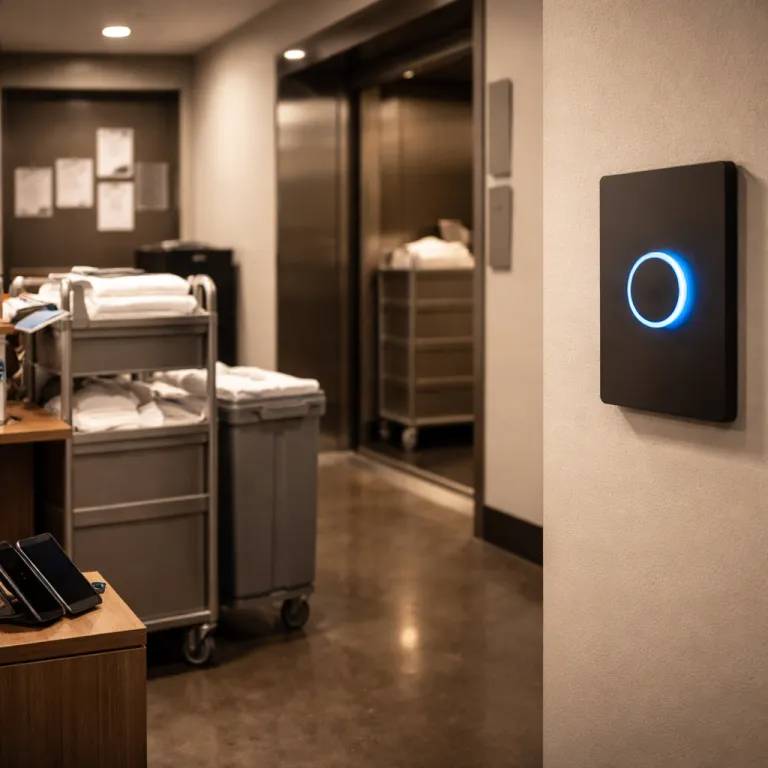
The capability jump: from basic hotel voice bots to LLM voice agents
Voice in the hospitality industry used to mean clunky IVR menus and in-room gadgets that barely understood a guest. Today, hotel-specific large language models sit behind every serious voice agent and quietly orchestrate complex guest service workflows in real time. For a general manager, that shift defines the new baseline for any credible voice AI hotel guest experience.
Early hotel voice systems matched keywords like “room service” or “late checkout” and pushed canned responses to guests. Modern voice agents interpret intent, sentiment and context from unstructured guest communication, then act across property management, CRM and maintenance systems without human agents touching the request. This is the difference between a toy and an operational assistant that actually helps your staff.
In practice, a hotel guest can now call the front desk, speak naturally to a voice assistant, modify a booking, log a complaint and request a late checkout in one continuous conversation. The same voice agent can route urgent calls to human staff in real time while resolving routine requests such as extra pillows, wake-up calls or basic room service orders. That is where a mature voice AI hotel guest experience starts to improve guest satisfaction instead of just adding another channel.
Vendors are aligning roadmaps with this capability map because hotels face structural staffing shortages and rising guest expectations. General Managers, Voice AI Vendors and Guests now form a three-sided ecosystem where each party depends on the others to make the technology work. Voice AI in hotels now handles diverse tasks beyond room service, from concierge-style questions to simple maintenance triage.
For multi-property brands, the strategic question is no longer whether to deploy voice assistants but how deeply to integrate them into property management and guest service processes. Hotels using AI-driven tools already report measurable gains in guest experiences and ancillary revenue when voice agents are configured to upsell late checkout or higher room categories. The capability jump is real; the competitive gap will come from how fast your équipe operationalises it with disciplined integration and change management.
What voice AI can actually do for guest experience in 2026
When you map the modern voice AI hotel guest experience, three clusters emerge: transactional tasks, contextual guidance and emotional recovery. Transactional tasks cover booking changes, room moves, amenity requests and simple room service orders that previously clogged front desk phone lines. Contextual guidance spans personalised recommendations, wayfinding inside the hotel and local tips that reflect the property’s positioning rather than generic search results.
On the transactional side, hotel voice systems now modify reservations, handle cancellations within policy and trigger payment flows through secure links sent to the guest. A hotel guest can call from the airport, ask the voice assistant to push back check-in time, add a baby cot to the room and confirm airport pickup in one flow. That single interaction deflects multiple calls from agents and lets staff focus on high-value guest engagement in the lobby.
Contextual guidance is where the voice AI hotel guest experience becomes a differentiator rather than a cost-saving tool. Voice assistants can combine PMS data, loyalty profiles and stay history to improve guest recommendations for restaurants, spa slots or meeting rooms that match the guest’s preferences. Many hotel groups now treat this type of AI-driven personalisation as a core capability, with voice emerging as the fastest-growing interface layered on top of existing chat and mobile channels.
Emotional recovery is the hardest test for any voice agent in the hospitality industry. When a guest calls angry about a noisy room or a missed wake-up call, the voice agent must detect frustration, escalate to a human within seconds and pre-fill the case with structured data. That is where LLM-powered voice agents outperform legacy call routing systems that treated all calls as equal.
For GMs, the capability map should include cross-channel continuity, because guests expect all interactions across channels to be seamless and uncomplicated. A complaint started with a hotel voice system should be visible to chat agents, email teams and on-property staff without the guest repeating their story. Case studies from major hotel brands, including work with language models for hotel discovery and booking support, show how deeply integrated conversational technology can reshape both pre-stay search and on-property guest experiences.
Integration blueprint: PMS, CRM, IoT and the front desk reality
No voice AI hotel guest experience delivers value if it floats above your core systems like a disconnected gadget. The voice agent must read and write to your property management platform, your CRM, your ticketing tool and, ideally, your building and room IoT layer. Without that integration, you simply add another façade on top of the same manual guest service bottlenecks.
Start with property management integration, because that is where bookings, room status, folios and key guest data live. A robust hotel voice deployment lets the voice assistant check availability, change room assignments, extend stays and trigger late checkout fees while respecting rate rules. When the PMS connection is shallow, you will see voice agents handing off too many calls to staff and eroding the ROI story.
Next comes CRM and guest profile data, which power personalisation and targeted upsell in both singular and plural guest journeys. If the voice agent can see loyalty tier, stay history and preferences, it can improve guest offers such as upgrades, spa packages or late checkout bundles in real time. That is how hotels reach meaningful increases in ancillary revenue through upselling when AI-driven tools are properly configured and monitored.
IoT integration turns the voice AI hotel guest experience into a tangible in-room differentiator. Guests can use voice assistants to adjust lights, temperature, curtains or do-not-disturb signs without touching a switch, which matters for accessibility and hygiene-conscious travellers. For staff, this reduces routine calls to the front desk and frees agents to handle complex guest communication and high-value service recovery.
Finally, you need a clear integration playbook that your IT équipe can repeat across properties and brands. Lessons from chatbot rollouts, such as the integration playbook for a CTO doing it a second time, apply directly to voice: define APIs, authentication, event schemas, latency expectations, monitoring, error handling, data retention and ownership before you scale. Hotels using AI-driven tools at scale also invest in training staff on new technology so that human agents know when to let the voice agent work and when to step in.
ROI, operations and the new metrics for voice enabled hotels
General managers do not buy a voice AI hotel guest experience for the press release; they buy it for P&L impact. The first ROI lever is call deflection, where voice agents handle routine calls that previously tied up front desk lines and created missed calls during peak check-in time. When guests can self-serve through hotel voice channels, staff can focus on complex cases and high-value guest engagement on the floor.
Measure the percentage of calls fully resolved by the voice agent without human intervention, broken down by use case such as booking questions, room service, maintenance requests or information calls. Track average handling time for both the voice assistant and human agents, because a good deployment shortens total resolution time even when escalation is needed. Monitor missed calls before and after deployment, since fewer missed calls translate directly into higher guest satisfaction and more direct bookings captured instead of lost to online intermediaries.
Revenue impact comes from structured upsell and cross-sell embedded in the voice AI hotel guest experience. When a guest asks about late checkout, the voice assistant can present paid options aligned with revenue management rules and push the choice to the guest in real time. Similar logic applies to spa slots, parking, breakfast packages or higher room categories, where voice agents can present offers without feeling like aggressive sales agents.
Operationally, the key benefit is labour reallocation rather than headcount cuts in most hotels. Voice assistants take over repetitive guest service tasks, while staff move to proactive lobby engagement, VIP handling and complex complaint resolution that machines should not own. This aligns with the broader industry insight that voice AI complements staff by handling repetitive tasks, rather than replacing them outright.
To keep the ROI story credible, build a dashboard that blends quantitative KPIs with qualitative feedback from guests and staff. Include metrics such as guest satisfaction scores for interactions involving the voice agent, staff satisfaction with the new workflow and the share of guest experiences that start or end with voice channels. A simple mini case study might track a property that lifts call deflection from 0 to 40 % and grows ancillary revenue by several points over six months after deployment. Over time, the most advanced hotels will treat voice AI as a core part of service design, not a bolt-on gadget chasing short-term savings.
Deployment pitfalls: accents, noise, privacy and change management
Every GM who has piloted a voice AI hotel guest experience knows the gap between vendor demos and a noisy lobby at 18:00. Accent handling remains a critical challenge, especially in global gateway cities where guests and staff speak dozens of languages and dialects. You need to test voice agents with real guests, in real time, across your actual acoustic environments before scaling.
Background noise in open-plan lobbies, busy corridors or pool areas can degrade recognition accuracy and frustrate guests. In rooms, poorly placed devices or weak microphones can turn a promising hotel voice deployment into a source of complaints rather than guest satisfaction. Work with your technology partner to tune wake word sensitivity, microphone arrays and noise cancellation for each room type and public space.
Privacy is another non-negotiable pillar of any voice AI hotel guest experience. Guests rightly ask how long their voice data is stored, who can access transcripts and whether devices are always listening inside the room. Hotels implement strict privacy policies to protect guest data, and your équipe must be ready to explain those policies clearly at check-in and in-room collateral.
Change management inside the property can make or break the project, because staff may initially see voice assistants as a threat rather than a tool. Training should emphasise how voice agents reduce repetitive calls, free up time for meaningful guest engagement and create new opportunities for career progression into tech-enabled roles. When front desk teams understand that the system routes complex calls to them and handles only routine requests, adoption improves dramatically.
Finally, avoid treating voice AI as a standalone gadget disconnected from your broader digital guest journey. Align your voice strategy with chatbots, mobile apps and smart room service ordering so that guests experience one coherent brand, not a patchwork of tools. A practical example is integrating voice with smart room service ordering workflows, where guests can start an order by voice and track it on their device without repeating details.
FAQ
What services can hotel voice AI provide beyond room service orders ?
Modern hotel voice systems handle bookings, concierge services, room control and upselling across the entire stay. A guest can modify a reservation, request maintenance, order room service and get local recommendations through the same voice assistant. This breadth of service is what turns voice agents into a core guest service channel rather than a novelty.
Is voice AI replacing hotel staff or supporting them ?
Voice AI is designed to complement staff by handling repetitive tasks such as simple information calls, standard booking questions and routine amenity requests. Human agents still manage complex cases, emotional service recovery and high-value guest engagement on property. In well-run hotels, this division of labour improves both staff satisfaction and guest experiences.
How does voice AI affect guest privacy inside the room ?
Responsible deployments minimise stored data, anonymise transcripts where possible and clearly explain what is recorded and why. Devices are typically configured with visible mute options and strict access controls so that only authorised staff or systems can view guest communication. Clear signage and transparent policies are essential to maintain trust in the voice AI hotel guest experience.
Which integrations matter most for a successful voice AI rollout ?
The highest-impact integrations connect the voice agent to the property management system, CRM, ticketing tool and, where available, in-room IoT controls. This allows the voice assistant to change bookings, open service tickets, personalise offers and adjust room settings without manual intervention. Without these connections, hotels risk creating a voice façade that still relies on staff to complete every request.
How should a GM measure the success of voice AI in their property ?
Key metrics include the share of calls resolved by the voice agent, changes in missed calls, guest satisfaction scores for voice interactions and incremental revenue from upsell offers. GMs should also track staff feedback on workload and workflow quality, since operational acceptance is critical for long-term success. Combining these quantitative and qualitative indicators gives a realistic view of the voice AI hotel guest experience impact.