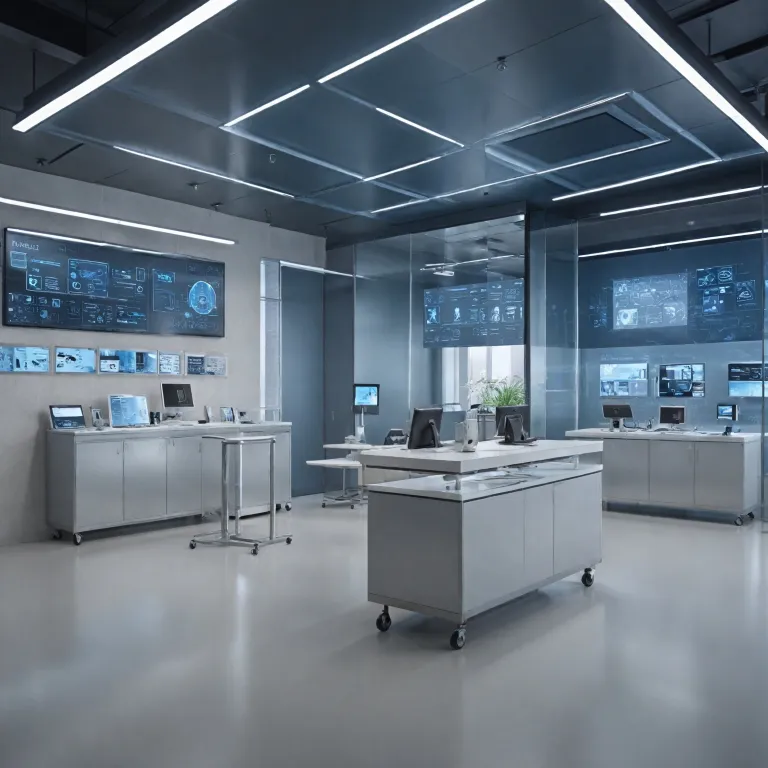
From hotel back office to intelligent core facility management
In hospitality groups, every facility now behaves like a shared service hub. Core facility management software brings a unified layer to manage each facility, every piece of equipment, and all users with consistent rules. This shift matters because IT leaders must manage complex facilities while keeping guest facing systems stable.
For hotel CTOs, the facility is no longer just a physical asset ; it is a data producing node. Modern facility management platforms track equipment usage in real time and connect that tracking to billing, service requests, and access control. When facilities become data centric, management teams can align capital expenditure with actual demand instead of intuition.
Vendors such as Agilent Technologies with iLab, Stratocore, Bookitlab, and Priority Software now export their expertise from university style core facilities into hospitality innovation labs. Their management software helps hotel groups manage equipment, centralize support, and standardize processes across multiple facilities. This cross pollination between university environments and hospitality ilab structures accelerates digital maturity.
For innovation directors, the core facility becomes a controlled sandbox where teams can book equipment, test a mobile app, and validate AI models without disrupting live operations. A user friendly browser interface lets each user access shared resources, while IT retains governance over security and compliance. Over time, this approach reduces shadow IT and improves the long term resilience of the digital stack.
When core facilities are orchestrated through a single management platform, travel tech startups can plug into the same environment. They gain controlled access to equipment, datasets, and test facilities under clear usage and billing rules. This creates a more professional collaboration model between hotel groups, software editors, and external innovators.
AI, IoT and the rise of predictive hospitality facilities
Core facility management software is rapidly integrating AI and IoT to transform how facilities operate. Sensors on equipment stream real time data into the management layer, where AI models learn patterns of usage and predict failures. This combination turns passive facilities into proactive systems that protect uptime for guest critical services.
In many hospitality ilab environments, the same equipment supports both research and live pilots. Management software helps teams manage equipment maintenance windows, schedule service requests, and coordinate access control across multiple user groups. When a browser based module flags an anomaly, support teams can intervene before a breakdown affects operations. This is particularly valuable for long term pilots involving payment, energy, or building automation.
Agilent Technologies, Stratocore, Bookitlab, and Priority Software are all investing in AI driven predictive maintenance modules. Their platforms already support automated billing based on equipment usage and time, and they now extend this logic to risk scoring and maintenance planning. For hotel IT directors, this means that a core facility can guarantee higher availability for critical equipment while keeping costs under control.
As hospitality groups connect their ilab facilities to property management systems and revenue platforms, the facility management layer becomes strategic. A core facility can host experiments on kassensystem hotels and revenue intelligence while isolating risks from production systems through strict access control. For more context on how transactional platforms reshape guest experience and revenue, see this analysis on hotel kassensystem and revenue intelligence.
For investors, the convergence of AI, IoT, and facility management creates a clear thesis. Platforms that can manage facilities, orchestrate equipment access, and provide browser support for complex workflows will capture a growing share of the hospitality innovation budget. The winners will be those whose software helps both technical and non technical users operate confidently.
Designing a core facility operating model for hotel innovation
Building an effective core facility in hospitality starts with governance, not technology. IT and innovation leaders must define which facilities, which equipment, and which users fall under the core facility perimeter. Once this scope is clear, core facility management software can enforce consistent rules for access, tracking, and billing.
In practice, a hotel group may treat its digital ilab, data lab, and training center as interconnected core facilities. Each facility hosts specialized equipment, from payment terminals to IoT gateways and video tag analysis rigs. Management software helps teams manage equipment reservations, book equipment for pilots, and log equipment usage for later analysis. This creates a transparent record of who used what, when, and for which project.
To support this model, platforms such as iLab, PPMS from Stratocore, Bookitlab, or FBS from Priority Software provide modular browser interfaces. A typical module covers scheduling, another handles billing, and a third manages service requests and equipment maintenance. Because everything runs in a standard browser, users can access the system from any facility without installing heavy clients. This browser support is essential for distributed hotel portfolios.
For data driven IT leaders, the operating model must also integrate with analytics platforms. Usage and billing data from core facilities can feed big data environments that analyze project performance and technology adoption. A detailed overview of how hotels leverage analytics for revenue and operations is available in this article on big data analytics in hotels.
Over the long term, a well designed core facility operating model becomes a competitive asset. It reduces time to market for new digital services, improves transparency for investors, and gives software editors a predictable environment for integration. For CTOs, this is the bridge between experimental innovation and industrial scale deployment.
User experience, access control and the role of the browser
Even the most advanced core facility management software fails if the user experience is poor. Hospitality professionals expect a user friendly interface that behaves like a modern mobile app while still running reliably in a standard browser. This is why vendors invest heavily in browser support, responsive design, and clear workflows for every type of user.
Access control sits at the heart of this experience, especially in multi tenant facilities shared by hotel brands, startups, and university partners. The system must let administrators manage users, define roles, and restrict equipment access based on training or compliance status. When a new user joins a project, they should be able to learn the interface quickly and request access to facilities without complex paperwork.
Modern platforms often embed support video elements directly into the browser interface. A short video tag can guide users through booking equipment, submitting service requests, or checking equipment maintenance status. This approach reduces the load on support teams and ensures that management rules are applied consistently across all facilities.
For IT security teams, the combination of browser based access and granular access control simplifies audits. Every action, from equipment usage to billing approvals, is logged and can be traced back to an individual user. This level of tracking is essential when core facilities host experiments involving payment data, guest profiles, or sensitive operational metrics.
In hospitality ilab environments, the same principles apply to both physical and virtual equipment. A user may book equipment in a test kitchen or request access to a virtual machine hosting a revenue algorithm. In both cases, the management software helps orchestrate permissions, monitor usage, and align resource allocation with strategic priorities.
From university style cores to hospitality innovation ecosystems
The hospitality sector can learn a great deal from university core facilities. For years, universities have used core facility management software to coordinate shared equipment, automate billing, and manage complex user communities. As hotel groups build their own ilab structures, they increasingly adopt similar management patterns and tools.
Platforms such as iLab from Agilent Technologies, PPMS from Stratocore, Bookitlab, and FBS from Priority Software were originally designed for research environments. They excel at tracking equipment usage, handling automated billing, and supporting long term projects with many users. When adapted to hospitality facilities, the same capabilities help manage equipment in test rooms, training centers, and digital labs.
One of the most valuable exports from the university world is the concept of the core facility as a neutral service provider. In this model, facilities and core facilities serve multiple internal and external clients under transparent rules. Management software helps align service requests, equipment maintenance, and billing with clear service level agreements. This neutrality is attractive for investors and startups who need predictable access to resources.
As hospitality groups extend their innovation ecosystems, they often partner with universities and technology providers. Shared facilities may host joint projects on AI, robotics, or guest experience analytics, with equipment access governed by a common platform. For a deeper exploration of how machine learning reshapes hospitality operations, see this article on machine learning in the hospitality industry.
Over time, these shared core facilities can evolve into regional hubs for travel tech experimentation. They provide standardized management, reliable browser access, and robust tracking for every user and every piece of equipment. This creates a fertile ground where hotel groups, software editors, and startups can collaborate with reduced friction and higher trust.
Financial transparency, KPIs and strategic value for investors
For investors and CFOs, the most compelling aspect of core facility management software is financial transparency. By linking equipment usage, time, and service requests to automated billing, these platforms turn opaque facility costs into granular, auditable data. This clarity supports better capital allocation and more rigorous evaluation of innovation projects.
In a typical hospitality ilab, multiple teams may book equipment, request support, and consume shared services. Management software helps track each activity, allocate costs to the right project, and surface KPIs on utilization and ROI. When facilities operate across several regions, browser based dashboards give executives real time visibility into performance. This is particularly valuable for long term programs involving AI, IoT, or new guest experience platforms.
“Core facility management software is a platform that integrates various functions such as equipment scheduling, service requests, billing, and reporting to streamline operations in shared resource facilities.” This definition captures why investors increasingly view core facilities as strategic infrastructure rather than overhead. When software helps align operational data with financial metrics, it becomes easier to justify continued investment in innovation.
For hotel CTOs, the next step is to integrate core facility data with enterprise analytics and ERP systems. Usage and billing information from facilities can feed portfolio level dashboards that compare projects, vendors, and technologies. Over time, this creates a feedback loop where management decisions are informed by real evidence rather than anecdote.
As the global market for core facility management platforms expands, hospitality specific use cases will gain more attention. Vendors that can offer user friendly interfaces, strong browser support, and deep integration with hotel systems will stand out. For investors, these are the signals that a platform can scale beyond university environments into the broader travel and hospitality ecosystem.
Key market signals and strategic moves for hospitality leaders
The market for core facility management software is entering a phase of accelerated growth. Analysts estimate that the segment already represents a significant global value, with projections indicating a strong compound annual growth rate over the coming decade. For hospitality leaders, this signals that facility management is shifting from niche tooling to mainstream infrastructure.
Several structural trends underpin this momentum, including AI driven predictive maintenance, IoT integration, and tighter links between facilities and financial systems. As more facilities adopt sensors and connected equipment, management software helps orchestrate data flows and automate responses. This is particularly relevant for hotel groups operating large portfolios of facilities with diverse equipment and user communities.
Mergers, partnerships, and ecosystem plays are also reshaping the landscape. Providers such as Agilent Technologies, Stratocore, Bookitlab, and Priority Software increasingly collaborate with ERP vendors, cloud providers, and specialized travel tech firms. Their goal is to ensure that facilities, equipment, and users can be managed through a single pane of glass. For hospitality CTOs, this reduces integration risk and accelerates deployment.
For innovation directors and investors, the strategic question is how to position their organizations within this evolving ecosystem. Early adopters who standardize on robust management platforms will be better placed to scale ilab initiatives, manage equipment fleets, and support complex user communities. They will also be able to benchmark facilities across regions and brands using consistent KPIs.
Ultimately, the hospitality sector stands to benefit from practices refined in university core facilities and research centers. By embracing user friendly, browser based management software that supports real time tracking, automated billing, and rigorous access control, hotel groups can transform their facilities into engines of continuous innovation. The next wave of competitive advantage will belong to those who treat core facilities as strategic assets rather than background utilities.
Key statistics on core facility management software
- Global core facility management software market value estimated at 1.5 billion USD.
- Projected market value expected to reach 3.2 billion USD over the next decade.
- Forecast compound annual growth rate (CAGR) of 9.5 % for the period from the mid twenties to early thirties.
Frequently asked questions about core facility management software
What is core facility management software ?
Core facility management software is a platform that integrates scheduling, service requests, billing, and reporting for shared facilities. In hospitality, it coordinates ilab environments, training centers, and test rooms under unified rules. This helps IT leaders manage equipment, users, and financial flows with greater transparency.
Who are the major providers of core facility management software ?
Key providers include Agilent Technologies with iLab, Stratocore with PPMS, Bookitlab, and Priority Software with FBS. These vendors originated in research and university core facilities before expanding into other sectors. Hospitality groups now adapt their platforms to manage innovation labs and shared service hubs.
What are the benefits of using core facility management software ?
The main benefits are improved resource scheduling, automated billing, and richer reporting. Facilities gain real time visibility into equipment usage, service requests, and maintenance needs. This reduces administrative workload and supports better strategic decisions for hotel CTOs and investors.
How does AI driven predictive maintenance fit into core facility management ?
AI models analyze equipment usage data from sensors to predict failures before they occur. Integrated into core facility management platforms, these models trigger proactive service requests and maintenance tasks. This protects uptime for critical hospitality systems and optimizes long term asset performance.
Why is browser based access important for hospitality facilities ?
Browser based access allows users across multiple hotels and regions to use the same interface without complex installations. It ensures consistent browser support, simplifies updates, and enables mobile friendly workflows. For distributed hospitality ilab networks, this is essential to scale adoption and maintain governance.
