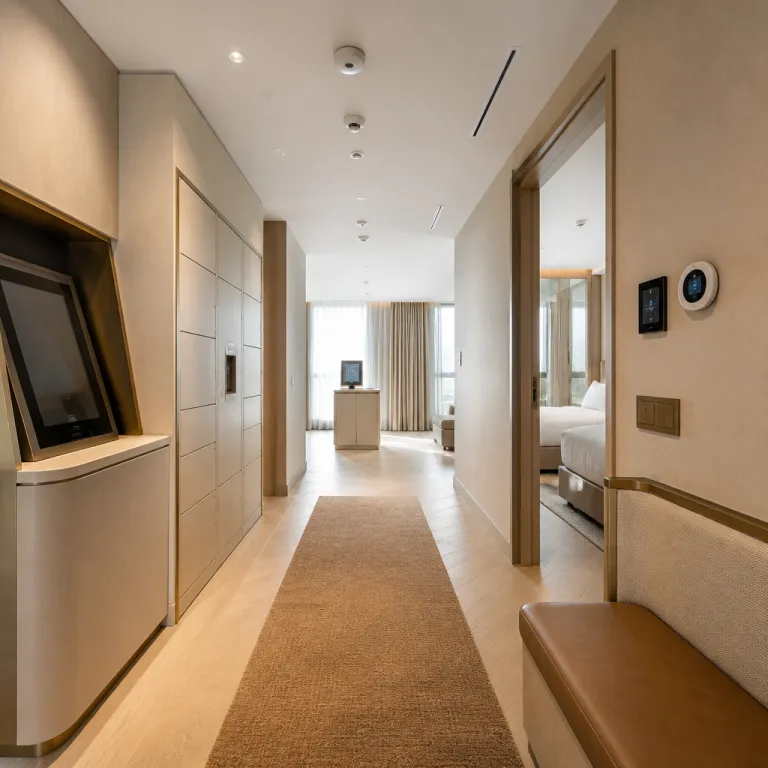
When algorithms define the guest journey
The centre of gravity for hotel AI guest experience design has shifted quietly. Product managers and engineers now map the guest journey in Figma and Jira long before a single hotel guest speaks to a front desk agent. That change is reshaping how every guest, in every room, experiences hospitality across entire hotel groups.
For many hotels, artificial intelligence projects start from data models, not from lived guest experiences. Teams optimise booking flows, pricing, and upsell offers because those metrics are easy to track in real time and simple to plug into management dashboards. Yet the most memorable part of a stay is rarely the algorithmically perfect offer, and more often the human service moment when staff focus on empathy rather than efficiency.
Engineers are trained to remove friction from systems, while hoteliers are trained to read emotions in guest interactions. When software teams own hotel AI guest experience design end to end, the risk is a guest journey that is fast, logical, and strangely flat. The hospitality industry has always differentiated on warmth, and that intangible value is hard to encode into property management workflows or customer service scripts.
Look at automated check in as a case study in this tension between technology and hospitality. A well designed mobile key journey can cut front desk queues and free staff for higher value service, which is a real operational win. Yet if the hotel design removes the welcome moment entirely, guests may feel they are entering a smart room product rather than a living hotel, and guest satisfaction scores can suffer despite shorter waiting time.
AI powered messaging systems show the same pattern across multiple properties and brands. Chatbots resolve a high percentage of routine guest interactions in real time, from extra towels to late checkout, and they generate clean data for hospitality management analytics. But when a guest experience involves stress, confusion, or disappointment, the same systems can feel like a wall between the guest and the one staff member who could actually fix the problem.
For CTOs and Directeurs IT, the question is no longer whether to deploy artificial intelligence in hotel operations. The real strategic question is who defines the design principles for guest experiences that are mediated by algorithms and APIs. If hotel AI guest experience design is left solely to engineers, the hospitality industry risks optimising for what can be measured and losing what makes the best hotels unforgettable.
Personalization at scale or hospitality at arm’s length ?
AI advocates argue that hotel AI guest experience design finally brings luxury level personalization to the midscale segment. A 120 room city hotel can now use data from booking history, preferences, and on property behaviour to orchestrate personalized offers that once required a dedicated concierge team. For investors and software éditeurs, this looks like pure upside for both revenue management and guest satisfaction.
There is truth in that narrative, especially when hotels connect their property management systems, CRM, and messaging platforms into a coherent data layer. When a guest books directly, the system can recognise them as a returning hotel guest, pre assign a preferred room type, and push a relevant offer at the right time during the stay. That is hotel AI guest experience design at its best, turning fragmented systems into a single, responsive service brain.
The risk emerges when personalization becomes a proxy for hospitality itself. A guest journey that is fully orchestrated by algorithms can feel like a well targeted e commerce funnel rather than a human centred hotel experience. Guests may receive perfectly timed offers and efficient customer service, yet still feel that no one on the hotel staff actually knows or cares about them as individuals.
Dynamic pricing and AI driven direct booking tools illustrate this tension clearly. Revenue teams love systems that scrape competitor rates and adjust prices in real time, and case studies such as AI powered price matching for direct booking show strong ROI for hotels that execute well. Yet when a loyal guest sees wildly fluctuating rates between stays, the experience can feel transactional, undermining long term trust in the brand.
For hotel groups operating multiple properties, the stakes are even higher because personalization logic often sits in a central platform. One flawed assumption in the data model can propagate across hundreds of thousands of guest experiences, from pre stay emails to on property offers. When engineers tune those models for conversion alone, they may unintentionally erode the emotional equity that local teams have built through years of attentive service.
Senior leaders should treat AI personalization as a powerful amplifier, not a replacement, for hospitality instincts. The most effective hotel AI guest experience design pairs quantitative signals with qualitative input from front desk teams, concierges, and operations managers. In practice, that means giving hotel staff the ability to override or annotate AI recommendations when the real situation on the ground does not match what the data suggests.
Operational AI that respects the craft of service
The most interesting AI deployments in hotel operations are not the flashy guest facing apps. They are the quiet systems that reshape how staff use their time, how hotel management allocates resources, and how property management platforms orchestrate back of house workflows. When done well, these tools let humans lean deeper into the parts of hospitality that machines cannot replicate.
Housekeeping is a prime example of hotel AI guest experience design that starts behind the scenes but ends in the guest room. Computer vision tools can now support room inspections and flag anomalies that traditional checklists miss, improving both cleanliness and maintenance outcomes. When those insights feed into hotel operations systems, supervisors can route staff more intelligently and reduce the number of times a guest has to call customer service about a missed amenity or a broken fixture.
Automation across the guest journey is expanding from messaging to maintenance, finance, and F&B. A detailed task by task map of hotel automation shows how AI can handle routine guest interactions, triage tickets, and synchronise data between systems without constant human intervention. The key design decision is whether this automation frees staff focus for high touch service or simply reduces headcount while leaving remaining employees more stretched and less available to guests.
For Directeurs IT, the architecture choices behind these tools matter as much as the user interface. A smart room platform that operates as a closed system may deliver impressive demos but create friction when integrated with existing property management and hospitality management stacks. By contrast, open API driven technology allows hotels to connect AI modules for energy management, in room controls, and guest messaging into a coherent experience that feels seamless to the hotel guest.
AI in housekeeping and maintenance also raises subtle questions about trust and transparency. When sensors and cameras feed real time data into management dashboards, staff may feel surveilled rather than supported, which can damage morale and service culture. Leaders need to frame these systems as tools that protect both guests and staff, for example by catching safety issues early or reducing the physical strain of repeated room checks.
The north star for operational AI should be simple and rigorous. If a system does not either improve guest satisfaction in a measurable way or give staff more time for meaningful guest experiences, it is probably just technology theatre. Hotel AI guest experience design that respects the craft of service will always measure success in human terms first and system efficiency second.
Who should own AI guest experience design inside a hotel group ?
As AI projects move from pilots to portfolio wide rollouts, governance becomes the hard problem. Many hotel groups still treat artificial intelligence as an IT initiative, led by the CTO or Directeurs IT and executed by vendors who specialise in systems integration. That structure almost guarantees that engineers, not hoteliers, will define the contours of the guest journey.
Yet the most effective hotel AI guest experience design work I see comes from hybrid teams. These teams pair product managers and data scientists with GMs, front desk leaders, and operations directors who live the reality of guest interactions every day. In those organisations, hospitality management expertise has equal weight to technology expertise when decisions are made about booking flows, messaging tone, and escalation paths for customer service.
Some groups are experimenting with new roles that sit between property management and digital transformation. Titles vary from VP of guest experience innovation to head of AI and service design, but the mandate is similar across the best hotels. These leaders own the full guest journey across multiple properties, from pre stay communication to post stay feedback, and they are accountable for both guest satisfaction metrics and the performance of AI powered systems.
For investors and startups, this shift in ownership has practical implications for go to market strategy. Selling AI tools only to the technology function risks missing the stakeholders who care most about the lived guest experience and the nuances of hotel design. Vendors who can speak fluently about both data architecture and service culture will have a structural advantage as the hospitality industry matures in its use of AI.
At board level, the question is not whether engineers should be involved in hotel AI guest experience design. They must be, because the complexity of modern systems, from smart room platforms to cross property loyalty engines, demands deep technical competence. The real strategic choice is whether those engineers work in isolation or in genuine partnership with the people who understand why a small gesture at check in can matter more than a perfectly timed push notification.
Hotel groups that get this right will treat AI as a new layer in the craft of hospitality, not a replacement for it. They will use data to inform, not dictate, how staff focus their energy during every stay, and they will measure success in both operational KPIs and the stories guests tell after they leave. In that world, engineers help design the hotel guest experience, but hoteliers still define what great hospitality feels like.
Key figures shaping AI driven hotel guest experiences
- McKinsey has estimated that AI and automation could raise productivity in travel and hospitality operations by up to 20 percent, which means more staff time can be redirected from routine tasks to higher value guest interactions when systems are designed thoughtfully.
- Research from Skift and Oracle has shown that a majority of hotel guests are comfortable with AI powered messaging for simple requests, but more than 60 percent still prefer human assistance for complex issues, underlining the need for clear escalation paths in hotel AI guest experience design.
- Studies by Deloitte on digital transformation in the hospitality industry indicate that properties with integrated property management, CRM, and revenue systems see up to 15 percent higher guest satisfaction scores than those with fragmented technology stacks, largely because staff have a unified view of the guest journey.
- Surveys of hotel executives by Hospitality Technology have reported that over half of respondents plan to increase investment in smart room technology and AI driven personalization, yet fewer than one third have formal cross functional teams that include both engineers and operations leaders to govern guest experience design.