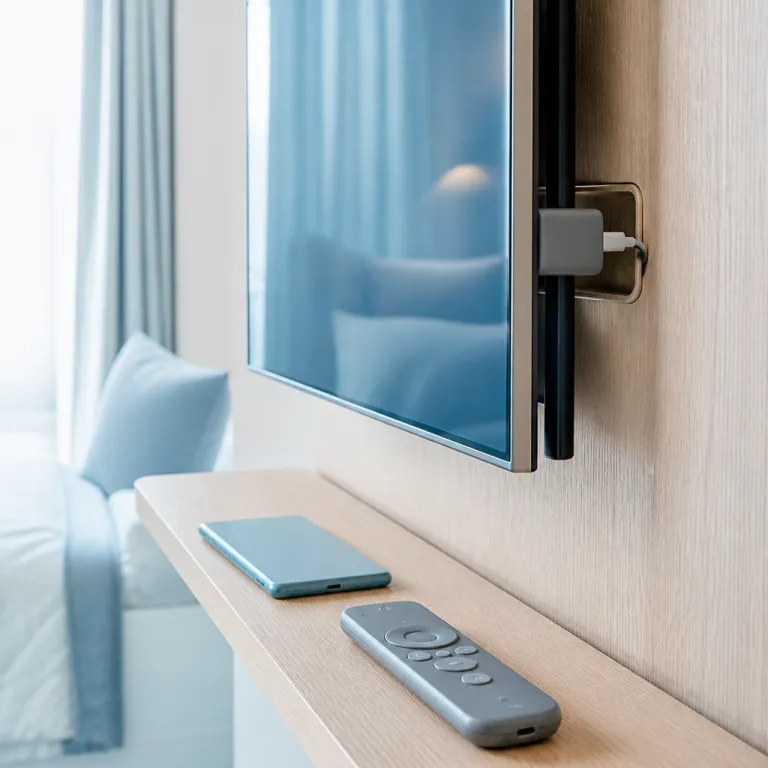
Why Chromecast solutions for hospitality have become a board level topic
When a frequent business traveler walks into a “smart” room, taps the remote, and realizes they cannot cast Netflix or a client presentation from their phone, the gap between home and hotel becomes obvious in seconds. That moment now shows up in guest reviews, Net Promoter Score, and brand rankings, which is why Chromecast solutions for hospitality have moved from gadget talk to boardroom agenda.
Hospitality executives see that guests stream more video on mobile devices than on any other screen, so the ability to cast that content securely to in room entertainment has become a core part of digital service design. Recent industry data shows that hotels offering in room streaming options reach roughly 65% penetration, while properties that implement robust casting solutions report guest satisfaction increases of around 20%. For example, Marriott International’s rollout of Enseo-powered casting across select North American properties between 2019 and 2022 reported double-digit gains in guest satisfaction with in room entertainment, according to Enseo’s 2022 performance summary. Those numbers are pushing CTOs and innovation leaders to treat each room as a managed node on a network of Chromecast devices rather than a passive TV endpoint.
In this context, Chromecast solutions for hospitality are not just about entertainment but about how hotels orchestrate wifi, identity, and privacy at scale. A well designed casting platform lets guests stream content from personal accounts without ever logging into the television, which sharply reduces operational risk. For investors and startups in travel tech, this shift turns hotel wifi and room entertainment into a programmable platform where new services, analytics, and AI driven personalization can be layered over secure casting.
Sources: Hospitality Technology, “2023 Lodging Technology Study” (https://hospitalitytech.com/2023-lodging-technology-study); Hotel Management, “Guestroom Entertainment Trends 2022” (https://www.hotelmanagement.net/tech/guestroom-entertainment-trends-2022); Enseo, “Enseo Delivers Record Guest Satisfaction Scores with In-Room Entertainment” (2022 performance summary, https://enseo.com).
From cable to casting solution platforms in smart hotels
The migration from legacy cable TV to hotel casting platforms is one of the clearest signals that smart hotels are becoming software defined spaces. Instead of negotiating channel bundles, a hotel now focuses on how reliably a guest can cast Netflix, YouTube, or business presentations from a mobile device to a hotel Chromecast in seconds. This change aligns with the expectations of tech savvy travelers who already treat every screen as a streaming endpoint.
Specialized providers such as Cast Gateway, TVCastor, UTH, Enseo, and Hotcast have built Chromecast solutions for hospitality that integrate tightly with existing hotel wifi and IPTV infrastructure. Enseo in particular positions its offer clearly with the statement: "Delivers Google-approved casting solutions." That level of certification matters when you deploy thousands of Chromecast devices across multiple hotels and need predictable behavior, firmware control, and long term support.
For innovation leaders benchmarking best tech hotels, the most advanced properties treat hotel casting as part of a broader digital guest journey rather than a standalone gadget. Flagship smart hotels in innovation hubs, such as the best tech hotels in Dubai highlighted in this analysis of innovation driven hospitality experiences, show how casting solutions, mobile keys, and AI powered concierges can work together. In these environments, a Chromecast hotel deployment becomes a foundational layer that supports personalized entertainment, contextual messaging, and even upsell scenarios on the in room screen.
Designing the network and wifi hotel architecture for secure casting
Once a hotel group decides to standardize on Chromecast solutions for hospitality, the next critical step is network architecture. A robust design ensures that each room has isolated access to Chromecast devices, that the hotel wifi remains stable under heavy streaming loads, and that no guest can accidentally cast to the wrong screen. This is where CIOs and CTOs must work closely with systems integrators and casting solution providers to align security, performance, and cost.
Modern hotel Chromecast deployments typically rely on per room network isolation, VLAN segmentation, and captive portal integration to map each mobile device to the correct room entertainment endpoint. QR code pairing has become a preferred method because it lets guests stream content without joining the main wifi hotel network, which reduces attack surfaces and simplifies compliance. When combined with cloud based management, these solutions give IT teams real time visibility on Chromecast devices, firmware versions, and streaming performance across all hotels in a portfolio.
For properties that already invest in remote work amenities, the same high quality hotel wifi that supports video conferencing must also sustain concurrent casting sessions in every room. Case studies on remote work tech amenities redefining the guest experience show that bandwidth planning and QoS policies are now strategic levers. When network design anticipates that every guest will cast at least one streaming session per evening, Chromecast hospitality deployments run smoothly, and IT teams avoid emergency upgrades during peak season.
Security, privacy, and AI ready data models in Chromecast hospitality
Security concerns often slow down innovation projects, yet Chromecast solutions for hospitality can actually strengthen a hotel data protection posture when implemented correctly. The core principle is simple: guests stream from their own accounts on personal devices, while the television and Chromecast devices remain stateless endpoints that never store credentials. This architecture sharply contrasts with legacy smart TV apps that required direct logins on the screen and often left residual data behind.
To ensure secure streaming, leading providers implement per room network isolation and QR code pairing, and they confirm that most solutions support Android, iOS, and Windows devices. Those verified practices, combined with Google certification for Chromecast hotels, give IT leaders a clear compliance narrative when discussing risk with ownership and legal teams. For investors, this also means that a Chromecast solution can scale across brands and regions without reinventing the security model for each property.
Once privacy is protected by design, anonymized telemetry from Chromecast solutions for hospitality can feed AI models that optimize operations and guest experience. For example, aggregated data on peak casting times, preferred streaming services, and device types can inform bandwidth planning, content partnerships, and even staffing in the hospitality industry. When this data is cross referenced with AI powered housekeeping analytics, such as those described in this overview of computer vision for room inspections, hotel leaders gain a holistic view of how technology shapes both front of house and back of house performance.
Operational playbook : from pilot Chromecast hotel to multi property rollout
Translating the promise of Chromecast solutions for hospitality into consistent reality across dozens of hotels requires a disciplined rollout methodology. The most effective teams start with a limited pilot in one or two properties, using a mix of business and leisure segments to stress test the casting solutions. During this phase, IT leaders track metrics such as connection success rate, average time to first cast, support ticket volume, and qualitative feedback on guest experience.
Providers like Cast Gateway, TVCastor, UTH, Enseo, and Hotcast support these pilots with cloud dashboards that show which rooms have active Chromecast devices, what proportion of guests stream content, and how often hotel wifi constraints cause interruptions. Once the pilot validates the Chromecast hospitality architecture, the next step is to standardize hardware models, cabling, and network templates so that each new Chromecast hotel deployment follows a repeatable pattern. This industrialization is essential for chains that plan to equip hundreds of rooms per month without overloading internal teams.
Training front office and maintenance staff is just as important as configuring the network, because they are the first line of support when a guest cannot cast. Clear scripts that explain how to connect a mobile device, how to reset a room entertainment endpoint, and when to escalate to IT reduce friction and protect guest satisfaction scores. Over time, analytics from Chromecast solutions for hospitality help refine these playbooks, showing which hotels need extra training, which devices fail more often, and where incremental investment in wifi hotel upgrades will have the greatest impact.
Monetization, partnerships, and the next wave of AI driven casting solutions
Once Chromecast solutions for hospitality are stable and widely adopted, hotel groups can explore monetization and partnership models that respect guest privacy while enhancing value. One avenue is to integrate contextual messaging on the television that appears after a guest successfully starts casting, offering late checkout, F&B promotions, or spa packages without interrupting entertainment. Because guests already engage with the screen to stream content, conversion rates on these subtle prompts can outperform traditional in room print collateral.
Another opportunity lies in co marketing agreements with streaming platforms, where hotels highlight specific services that work seamlessly with their casting solution while negotiating preferential terms or loyalty integrations. As AI capabilities mature, we will see recommendation engines that analyze anonymized casting patterns across Chromecast hotels to suggest the optimal mix of bandwidth, content partnerships, and device models for each market. For travel tech startups and software vendors, this opens a field of specialized analytics tools that sit on top of Chromecast devices and hotel wifi infrastructure.
Looking ahead, the most advanced Chromecast solutions for hospitality will integrate with voice assistants, property management systems, and AI based personalization engines to create a unified digital layer in every room. Guests will move from one hotel to another and still enjoy a familiar casting experience, while brands maintain control over security, branding, and data governance. In that scenario, room entertainment stops being a cost center and becomes a strategic asset that shapes how guests perceive innovation, comfort, and trust in the hospitality industry.
Key statistics on Chromecast solutions for hospitality
- Hotels offering in room streaming options now represent about 65% of the market according to Hospitality Technology’s Lodging Technology Study, showing that Chromecast solutions for hospitality have moved into the mainstream of digital investment.
- Properties that implement secure hotel casting platforms report guest satisfaction increases of around 20% in surveys compiled by Hotel Management, highlighting the direct link between room entertainment quality and overall experience.
- Industry timelines indicate that demand for in room streaming surged at the start of this decade, with Google approved casting solutions from providers like Enseo accelerating large scale deployments across global hotel portfolios.
- Cloud based casting solutions such as those from Hotcast reduce on site hardware complexity, which helps multi property groups roll out Chromecast devices to thousands of rooms while maintaining consistent wifi hotel performance.
FAQ : Chromecast solutions for hospitality
How do hotels ensure secure streaming for guests ?
Hotels ensure secure streaming by implementing per room network isolation so that each Chromecast device is only visible to the corresponding room, and by using QR code pairing that lets guests connect without exposing the wider network. Leading Chromecast solutions for hospitality also rely on Google certification and regular firmware updates to close vulnerabilities. This combination protects both the guest and the hotel while keeping the casting experience simple.
Can guests use their own streaming accounts without logging into the TV ?
Yes, modern hotel casting platforms are designed so that guests stream content directly from personal accounts on a mobile device, tablet, or laptop. The television and Chromecast devices act only as receivers, which means no credentials are stored on the screen. This approach improves privacy and eliminates the need for staff to reset apps between stays.
Are Chromecast solutions for hospitality compatible with all types of devices ?
Most Chromecast solutions for hospitality support Android, iOS, and Windows devices, covering the vast majority of smartphones, tablets, and laptops used by travelers. Compatibility is usually managed through standard casting protocols such as Google Cast or Miracast, combined with hotel specific onboarding flows. IT leaders should still validate edge cases, such as corporate VPNs or restricted devices, during pilot deployments.
What is the operational impact of deploying Chromecast devices in every room ?
Deploying Chromecast devices across all rooms requires upgrades to hotel wifi capacity, structured cabling, and sometimes television replacements, but it often reduces long term content licensing costs compared with premium channel packages. Front office and maintenance teams need training to handle basic troubleshooting, while IT gains new monitoring dashboards from casting solution providers. Over time, the improved guest experience and higher satisfaction scores tend to offset the initial capital expenditure.
Should hotels keep traditional TV channels once casting solutions are live ?
Many hotels maintain a slimmed down set of linear channels for news and live events while positioning Chromecast solutions for hospitality as the primary entertainment option. This hybrid model respects guests who prefer traditional viewing while encouraging others to cast their own content. As streaming adoption continues to rise, some brands may progressively reduce channel lineups to free budget for better networks and smarter room entertainment platforms.
