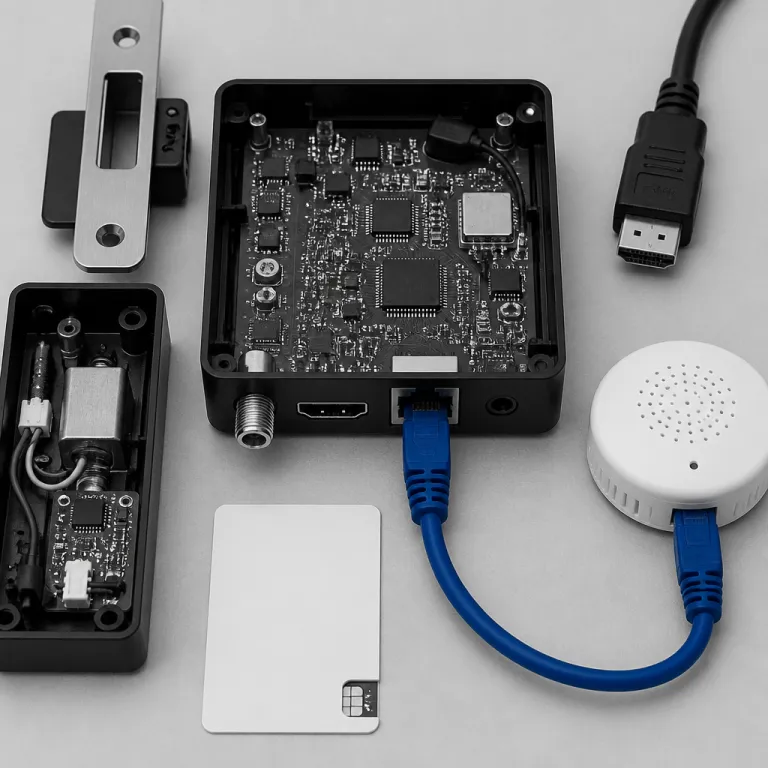
From television hardware to IoT hub: why the Enseo set top box matters
The Enseo set top box has quietly evolved into a strategic IoT node. For an IT director or CTO in a large hotel, this single device now concentrates entertainment, data, and smart security orchestration in every guest room. That shift turns what looked like a commodity television accessory into a core value creation lever for guest experience and operational efficiency.
Enseo, based in Plano in the United States, built its reputation on reliable in room entertainment for hospitality rather than on flashy consumer gadgets. Its HD4000 CableCARD model, part of the ICEbox platform, is a mature hospitality TV solution that already runs streaming apps, linear channels, and interactive services at scale. When you deploy one Enseo media box per room, you effectively install a distributed computing fabric that can talk to PMS, building management, and smart remote controls.
Hotels using Enseo now exceed several thousand properties worldwide, which gives IT leaders confidence that the technology is not an experimental set top concept. According to Enseo’s own deployment figures, the company has passed the 5,000 hotel mark (as reported in Enseo corporate materials), demonstrating that the platform is proven in real hotel environments. The manufacturer positions each Enseo hotel deployment as a long term platform, not a short lived item that will require rapid returns processing or frequent replacement remote cycles. That installed base also generates continuous feedback from operators, which Enseo uses to refine both hardware models and software features for hospitality and healthcare‑adjacent hotel environments.
Turning the Enseo set top box into the digital concierge of the room
Once the Enseo in room gateway is in place, the real value comes from software and integrations. The ICEbox platform can integrate with hotel systems to surface room controls, service requests, and local recommendations directly on the television. In practice, the Enseo set top box becomes a universal interface that complements mobile apps rather than competing with them.
For innovation leaders, this means the Enseo hotel deployment can host AI driven journeys that start on the TV and continue on a guest smartphone or a smart remote. A guest might use the remote control to dim lights, adjust temperature, and then scan a QR code on screen to continue the same flow in a messaging channel. This aligns naturally with projects around smart lighting and energy optimization, as explored in many smart lighting hotel case studies that focus on elevating guest experience with intelligent lighting systems and occupancy aware controls.
Because the Enseo set top box already manages HDMI, IP, and often Bluetooth connectivity, it can act as a bridge between legacy devices and new IoT sensors. A universal Enseo software layer can expose APIs for third party software vendors that want to build context aware services on top of the TV interface. For the guest, the experience remains simple: they see a clean menu, a responsive smart remote, and fast delivery of services without needing to understand the complexity behind the box.
Designing Enseo set top box architectures for smart security and compliance
Security is where many IoT projects in hospitality fail, yet the Enseo set top box can help structure a safer architecture. Because the HD4000 and similar models are designed for multi tenant hotel networks, they already implement content protection and network segmentation patterns. Those same patterns can be extended to smart security use cases, such as integrating door lock status, occupancy sensors, or even camera analytics in public areas, while keeping guest data isolated.
Enseo partnered with Verimatrix to harden content delivery and encryption, which is directly relevant when the set top box also handles personal streaming credentials. Public product documentation from both companies highlights secure key management, watermarking, and rights enforcement as part of the joint solution. Hotels that position the Enseo hotel platform as a security aware edge device can reduce the attack surface compared with ad hoc IoT gateways. For investors and startups, this creates an opportunity to build certified applications that run on the box and respect both hospitality regulations and the expectations of buyers in high end tech hotels in innovation driven destinations.
In Dubai and other innovation hubs, the best tech hotels already treat the television as a secure digital touchpoint rather than a passive screen. Case studies of innovation driven hospitality show that when the Enseo set top box is part of a broader architecture, it can log events, enforce access control policies, and feed anonymized telemetry into central SIEM tools. That telemetry then supports smart security analytics, from anomaly detection in remote controls usage to unusual patterns in room service delivery requests.
Procurement, shipping, and lifecycle management of Enseo set top box fleets
From a procurement perspective, the Enseo set top box is no longer a simple audiovisual purchase; it is an IoT infrastructure decision. IT directors must evaluate not only the hardware model and price shipping conditions, but also the lifecycle of software updates, replacement remote logistics, and returns processes. The total cost of ownership depends heavily on how efficiently the hotel manages items such as remote controls, power supplies, and mounting brackets over time.
When sourcing Enseo items from a seller in the United States or through regional distributors, shipping cost and delivery time become critical for multi property groups. A central warehouse strategy can help standardize the universal Enseo configuration, keep a buffer of great item spares, and reduce downtime when a set top box fails. Hotels that negotiate clear service level agreements on shipping, returns, and replacement remote availability tend to maintain higher guest experience scores because rooms rarely stay out of order for technical reasons.
Feedback and item reviews from other hospitality operators are valuable signals when choosing between different Enseo set top box bundles. Properties that report the best outcomes usually highlight robust remote control hardware, intuitive smart remote layouts, and responsive support on firmware issues. In one published case study from a North American multi brand hotel group, the IT director reported a double digit reduction in in room TV related trouble tickets after standardizing on a single Enseo configuration and centralizing spares. For investors, these operational details matter because they influence both the stability of recurring revenue and the scalability of Enseo hotel deployments across diverse hotel and resort environments.
Integrating Enseo set top box data with AI, PMS, and revenue systems
The Enseo set top box generates a rich stream of behavioral data that often remains underused. Every interaction with the remote control, every app launch, and every service request from the hotel room can be logged and correlated with PMS and CRM records. When this telemetry is anonymized and aggregated, it becomes a powerful input for AI models that predict demand, personalize content, and optimize staffing.
Forward looking CTOs connect Enseo hotel data with AI concierge platforms to orchestrate cross channel journeys. A guest might start a movie on the Enseo set top box, pause it to go to the bar, and receive a contextual offer on their mobile device that references their in room preferences. Frameworks for measuring AI concierge ROI, such as those that combine deflection, conversion, and satisfaction metrics, can easily incorporate Enseo usage data as a key signal.
For software publishers and travel tech startups, the universal Enseo environment is an attractive edge computing layer. They can build applications that run partly on the box and partly in the cloud, using APIs to synchronize preferences, loyalty status, and even smart security permissions. Over time, this hybrid model reduces latency for critical interactions, such as channel changes or room controls, while still enabling advanced analytics and machine learning in centralized systems.
Guest centric design: remotes, interfaces, and accessibility in Enseo ecosystems
Guests rarely think about the Enseo set top box itself; they judge the experience through the remote, the interface, and the content. That makes the design of remote controls and on screen menus a strategic topic for hospitality brands that want to differentiate. A well designed smart remote with clear buttons, backlighting, and tactile cues can turn a complex IoT ecosystem into a simple, reassuring interaction.
Many hotels pair the Enseo set top box with a universal remote control that can manage the TV, sound system, and sometimes blinds or lights. In mixed fleets where a Samsung remote or other brand specific devices coexist, the universal Enseo configuration helps standardize the guest journey. When a remote breaks or goes missing, a replacement remote must be easy to pair and provision so that the hotel room returns quickly to service without requiring technical intervention.
Accessibility is another area where Enseo items can support inclusive design, from larger fonts on screen to voice guidance and simplified menus. Hotels that treat each Enseo set top box as a configurable item rather than a fixed appliance can adapt interfaces for seniors, families, or medical guests in healthcare oriented hotel contexts. Over time, consistent feedback from operators and direct comments from guests should guide interface refinements, ensuring that the best practices spread across all properties in the portfolio.
Key statistics on Enseo set top box adoption and impact
- More than 5,000 hotels worldwide use Enseo solutions, according to the manufacturer, which indicates that the Enseo set top box architecture has reached significant scale in hospitality deployments.
- The HD4000 CableCARD set top box was introduced after Enseo had already operated for over a decade, showing a long product maturation cycle before large scale HD content delivery in hotel rooms.
- Partnerships with Intelity and Verimatrix position Enseo within an ecosystem that combines guest experience platforms and content security, which is critical for hotels that want to integrate streaming apps securely.
- Enseo reports that its set top platforms are designed to support both traditional linear channels and modern streaming applications, which helps hotels transition gradually without disrupting existing content contracts.
- The company’s headquarters in Plano, Texas, anchors its operations in a major technology corridor in the United States, facilitating collaboration with chipset vendors and security partners.
FAQ: Enseo set top box and smart hotel strategies
What is Enseo's HD4000 and how is it used in hotels ?
Enseo's HD4000 is a CableCARD set top box designed for HD content delivery and interactive services in hotels. In practice, IT directors deploy the HD4000 as the core Enseo set top box in each room, where it manages channels, streaming apps, and interactive services. It also serves as an integration point with PMS and building systems in many hospitality projects.
Does Enseo support streaming apps on its set top boxes ?
Yes, Enseo supports various streaming applications on its set top platforms. Hotels typically configure the Enseo set top box to expose popular services through a branded interface, allowing guests to access their own subscriptions securely while maintaining content protection.
Who are Enseo's main technology partners for smart hotel deployments ?
Enseo’s main partners for smart hotel deployments include Intelity and Verimatrix. Intelity focuses on guest experience and mobile integrations, while Verimatrix provides content security, so together they help Enseo set top box deployments combine rich interfaces with robust encryption and rights management.
How should hotels evaluate shipping, returns, and lifecycle costs for Enseo devices ?
Hotels should look beyond unit price and consider shipping cost, delivery time, and the ease of handling returns for faulty items. A clear process for replacement remote orders, spare set top box inventory, and firmware support often has more impact on guest experience than small differences in hardware pricing. Multi property groups usually negotiate framework agreements that cover logistics, service levels, and long term software maintenance.
Can Enseo set top box data be used in AI and analytics projects ?
Yes, the Enseo set top box generates detailed usage logs that can feed AI models and analytics dashboards. When combined with PMS, CRM, and building management data, this telemetry helps hotels understand content preferences, optimize energy usage, and refine offers in real time. Proper anonymization and governance are essential to respect privacy while still extracting value from these data streams.
