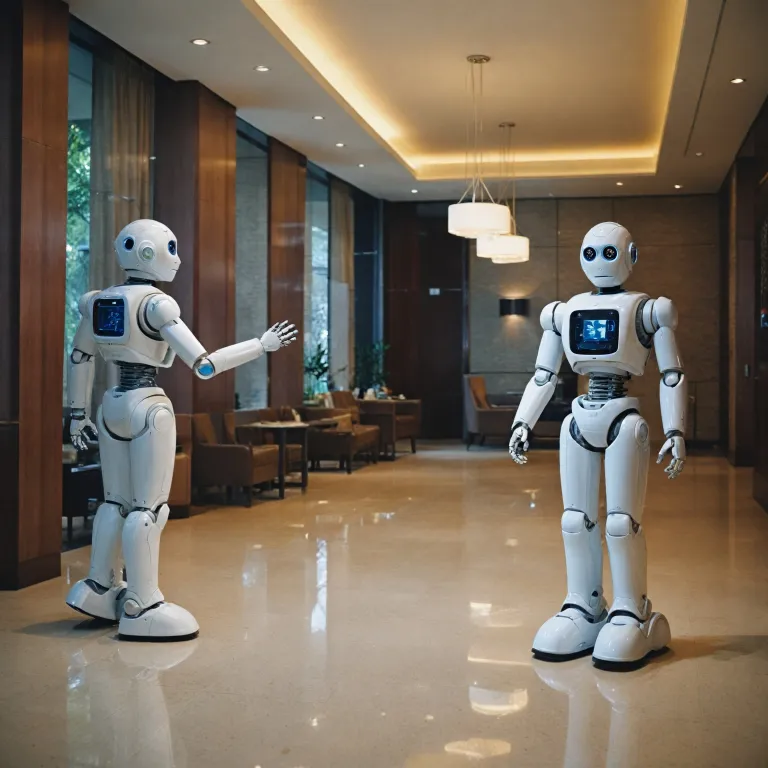
The evolution of hotel robots for room service: From novelty to necessity
Hotel robots for room service have transitioned from futuristic novelties to essential assets in the hospitality industry. As hotels face persistent labor shortages and rising operational costs, robots are increasingly deployed to automate routine tasks such as delivering amenities, food, and other items to guest rooms. This shift is not only about efficiency; it is also about elevating the guest experience by ensuring timely, consistent, and contactless service delivery.
Robots in hotels are now integrated with advanced AI and machine learning, enabling them to navigate corridors, call elevators, and interact with guests seamlessly. Companies like Savioke, with their Relay delivery robots, and SPARK Robotics, with ButlerBot W3, have demonstrated how service robots can enhance both guest satisfaction and staff productivity. The adoption of hotel robots for room service is driven by the need to address staffing challenges while maintaining high standards of hospitality and personalized service.
As the number of hotels using service robots worldwide surpasses 500, the impact on the hospitality industry is profound. Service robots are not replacing human staff but complementing them, allowing hotel employees to focus on more complex and guest-centric tasks. This evolution marks a significant step in the integration of robot technology into daily hotel operations, setting new benchmarks for service delivery and guest experience.
Key players and technologies shaping hotel robots for room service
The landscape of hotel robots for room service is shaped by a diverse array of technology providers and innovative solutions. Savioke’s Relay robots are widely recognized for their ability to autonomously deliver food and amenities to guest rooms, navigating elevators and corridors with precision. SPARK Robotics offers the ButlerBot W3 and T3, which are designed to handle a range of service delivery tasks, from food delivery to housekeeping support. Aethon’s T4H Room Service Delivery Robot further expands the possibilities by autonomously transporting items guest need directly to their rooms.
Humanoid robots like Zerith H1, developed by Zerith, are now being deployed in Chinese hotels to assist with housekeeping and guest requests. Panasonic’s HOSPI robot is utilized in hotels for serving drinks and clearing tables, demonstrating the versatility of hospitality robots. Qihan Technology’s Sanbot, an intelligent cloud-enabled service robot, is also making inroads into the hospitality industry, offering personalized guest interaction and efficient service delivery.
Integration with hotel management systems is a critical factor in the success of these technologies. Solutions like ALICE allow guests to request services via an app, seamlessly connecting with service robots for prompt fulfillment. For a deeper dive into how these technologies are revolutionizing the sector, explore this comprehensive analysis of hospitality robotics.
Enhancing guest experience and satisfaction through service robots
Guest experience is at the heart of every hospitality operation, and hotel robots for room service are redefining what it means to deliver exceptional service. Service robots are programmed to recognize guest preferences, ensuring that deliveries are personalized and timely. The ability of delivery robots to autonomously navigate hotel corridors and call elevators means that guests receive their requested items quickly, without unnecessary delays or human error.
Robots hospitality solutions are also enhancing guest satisfaction by providing contactless interactions, which have become increasingly important. The novelty of interacting with a service robot often delights guests, adding a memorable element to their stay. As one of the verified quotes states, “Guests may encounter service robots during their stay; familiarize yourself with their functions.”
Hotels are leveraging robot technology not only for room service but also for front desk operations, housekeeping, and even wellness services such as robotic massage tables by Aescape. The integration of these technologies ensures that guests enjoy a seamless, efficient, and innovative hospitality experience. For more insights on optimizing guest satisfaction with service robots, visit this resource on guest-centric hotel automation.
Operational benefits and efficiency gains from hotel robots for room service
The operational benefits of hotel robots for room service are significant and measurable. Studies indicate a 30% increase in room service efficiency when robots are deployed, alongside a 20% reduction in labor costs due to automation. These gains are achieved by automating repetitive tasks such as delivering food, amenities, and housekeeping items, freeing up staff to focus on higher-value guest interactions.
Service robots and delivery robots are designed to operate around the clock, ensuring that guest requests are fulfilled promptly regardless of the time of day. The ability to integrate with elevators and hotel management systems further streamlines service delivery, reducing wait times and minimizing disruptions. Robots deliver items guest need directly to their rooms, enhancing the overall guest experience while optimizing operational workflows.
Hotels adopting robot technology are also better equipped to handle fluctuations in demand, particularly during peak periods or labor shortages. The flexibility and scalability of service robots make them a valuable asset for hotels seeking to maintain high service standards while controlling costs.
Challenges and considerations in deploying robots hospitality solutions
While the benefits of hotel robots for room service are clear, there are important challenges and considerations to address. Integration with existing hotel infrastructure, such as elevators and management systems, requires careful planning and investment. Ensuring that robots can navigate complex layouts and interact effectively with both guests and staff is essential for successful deployment.
Staff training and guest education are critical components of a smooth transition to robot-assisted service delivery. As highlighted in the expert dataset, “If unsure about interacting with a service robot, seek assistance from hotel staff.” This underscores the importance of clear communication and support for both guests and employees. Data security and privacy are also key concerns, particularly as robots collect and process information related to guest preferences and service requests.
Hotels must also consider the balance between automation and human touch. While robots can handle many tasks efficiently, the role of staff in providing personalized, empathetic service remains irreplaceable. By leveraging robots hospitality solutions as a complement to human staff, hotels can achieve the optimal blend of efficiency and guest satisfaction.
Future trends: AI, IoT, and the next generation of hotel service robots
The future of hotel robots for room service is closely linked to advancements in AI, IoT, and smart hotel systems. The development of multi-functional service robots capable of handling a wide range of tasks is accelerating, driven by ongoing innovation from companies like Savioke, SPARK Robotics, and Aethon. Integration with IoT devices enables robots to access real-time data on guest preferences, room status, and service requests, further enhancing the guest experience.
AI-powered robots are expected to play an increasingly central role in the hospitality industry, providing consistent, efficient, and innovative services. As stated in the dataset, “While robots are automating certain tasks, they are generally used to complement human staff, allowing them to focus on more complex and personalized guest services.” This approach ensures that hotels can meet evolving guest expectations while maintaining operational excellence.
The adoption of delivery robots and service robots is set to expand as hotels seek to differentiate themselves through technology-driven guest experiences. The next generation of hospitality robots will likely feature enhanced autonomy, improved interaction capabilities, and deeper integration with hotel ecosystems, setting new standards for service delivery and guest satisfaction.
Key statistics on hotel robots for room service
- Number of hotels using service robots worldwide: 500 hotels
- Increase in room service efficiency with robots: 30%
- Reduction in labor costs due to automation: 20%
Frequently asked questions about hotel robots for room service
What tasks can hotel service robots perform?
Hotel service robots can deliver room service items, provide information, assist with housekeeping tasks, and even offer services like massages.
Are hotel service robots replacing human staff?
While robots are automating certain tasks, they are generally used to complement human staff, allowing them to focus on more complex and personalized guest services.
How do hotel service robots navigate within the hotel?
These robots use sensors, cameras, and AI algorithms to autonomously navigate hotel corridors, operate elevators, and avoid obstacles.
Trusted sources for further information on hotel robots for room service
- https://www.phocuswire.com
- https://www.hospitalitynet.org
- https://www.hotelmanagement.net
