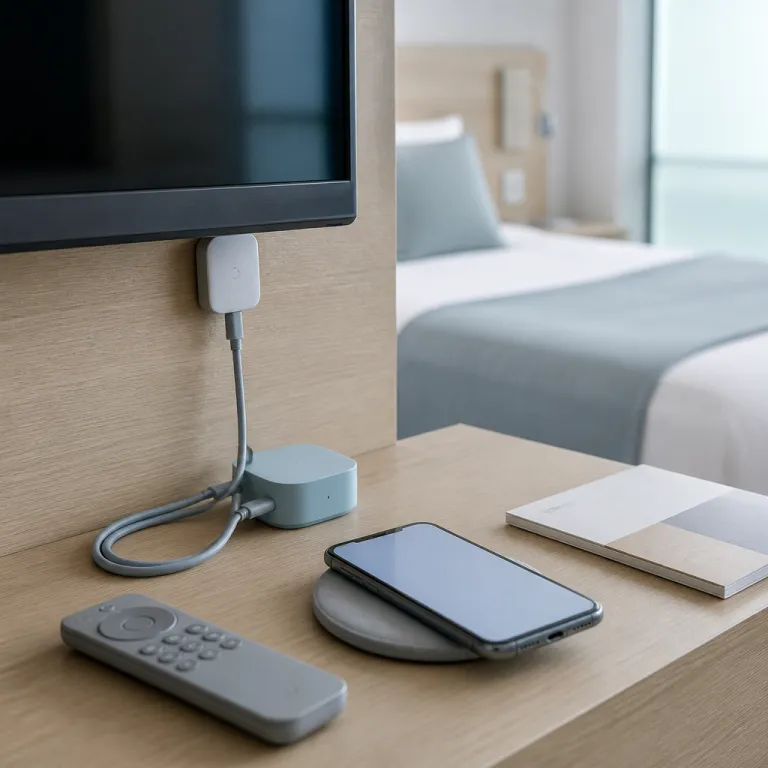
Guest cast solution as the new touchstone of smart room entertainment
A modern guest cast solution has become the touchstone for any serious smart hotel strategy. In a sector where every guest expects seamless casting from personal devices, the gap between consumer entertainment and in room technology is now a direct risk for loyalty. For Directeurs IT and CTOs, the shift from legacy pay TV to intelligent room entertainment is no longer optional, because it defines the perceived value of the entire hospitality experience.
In practice, a robust casting solution lets each guest cast personal content from a phone or tablet to the hotel room television without friction. The best casting solutions hide complexity behind a simple scan code on screen, which allows guests to pair a device in seconds while keeping the hotel network and guest data strictly segmented. This approach transforms the hotel room TV from a static screen into a secure media hub where guests stream Netflix, Disney Plus, YouTube or Spotify with their own accounts, yet the hotel still controls the infrastructure and service quality.
For innovation leaders, the guest cast solution is also a strategic data layer, not just an entertainment gadget. Usage analytics from hotel casting across hundreds of rooms reveal patterns about content preferences, device types and peak streaming times that can inform broader digital investments. When guests cast their own content, they implicitly tell the hotel which platforms matter most, and this signal is often more reliable than traditional satisfaction surveys, provided that data is aggregated, anonymised and interpreted alongside operational metrics such as stay length or segment.
Security, privacy and network architecture for hotel casting at scale
Behind every successful guest casting deployment sits a carefully designed network architecture that balances security, privacy and performance. A purpose built VLAN structure for casting hotels isolates each hotel room so that one guest device cannot see another, while still allowing the room cast device to communicate with cloud services. This segmentation is now a baseline expectation for investors and IT directors who treat the entertainment experience as part of the hotel’s critical infrastructure.
Modern casting solutions rely on short lived pairing mechanisms, where a scan code on the TV links a guest device to a specific room entertainment endpoint without exposing the underlying Wi Fi network credentials. A typical flow assigns each room cast device to its own VLAN, generates a time limited token when the QR code is displayed, and validates that token against a cloud controller before authorising any stream. When the guest checks out, the cast hotel platform automatically revokes the token, clears cached keys and removes any association with the personal streaming account, which prevents accidental access by the next guest.
Security also extends to operational workflows at the front desk and in the back office. Staff should never handle personal Netflix or YouTube Spotify credentials, and a mature guest cast solution enforces this by design rather than by policy. For IT leaders reviewing intelligent access and digital key projects, the same zero trust principles applied to casting solution networks should also guide investments in secure room access and connected locks, as explored in many analyses of how hotels reinvent security and guest experience with intelligent access.
From TV screen to AI ready media platform in hospitality
Once a hotel has deployed a stable guest cast solution, the television ceases to be a simple display and becomes an AI ready media endpoint. Every time guests stream content through hotel casting, the system generates anonymised usage data that can feed machine learning models for demand forecasting, upsell timing and even energy optimisation. This is where a casting solution stops being a cost centre and starts acting as a strategic asset for hospitality groups and tech investors.
Specialised platforms in the TV and media industry show how conversational AI and data analysis can transform raw casting data into actionable insights. For example, TV analytics tools that map guest star appearances across thousands of episodes demonstrate how AI algorithms and structured content can reveal patterns that humans would miss. The same logic applies when hotels analyse guests cast behaviour across thousands of hotel rooms, identifying which combinations of Netflix Disney usage, YouTube Spotify sessions and device types correlate with higher ancillary spend or specific stay patterns.
For hotel brands that want to turn room entertainment into a personalised media platform, intelligent TV casting frameworks already described in depth by hospitality technology analysts provide a clear roadmap. By integrating casting solutions with CRM and property management systems, a hotel can align content prompts, language settings and even on screen offers with guest profiles while still respecting privacy. The result is a room cast environment where the TV welcomes the guest by name, offers relevant entertainment options and quietly feeds anonymised engagement data back into the AI stack for continuous optimisation.
Designing purpose built devices and interfaces for frictionless guests cast journeys
Hardware design remains a critical success factor for any guest cast solution that aims to scale across multiple hotels and brands. Consumer grade dongles rarely meet the reliability, remote management and security requirements of professional hospitality networks, which is why purpose built casting devices are gaining traction among solution hotels. These devices are engineered for 24/7 operation, central monitoring and automatic firmware updates, reducing truck rolls and support tickets for IT teams.
The guest journey must feel effortless from the moment a guest enters the hotel room and sees the welcome screen. A clear prompt to scan a code with a smartphone camera, followed by a one tap confirmation, is far more effective than asking guests to type long URLs or manual pairing codes on a remote control. When the interface allows guests to connect and stream content in under thirty seconds, adoption rates climb, and the perceived entertainment experience often rivals or exceeds what they have at home, as shown in pilot reviews where casting satisfaction scores match or surpass home streaming benchmarks.
For startups in travel tech and software vendors, the opportunity lies in building orchestration layers that sit above the casting solution. These layers can coordinate room entertainment with lighting scenes, temperature presets and even voice assistants, creating a unified smart room experience. In such a scenario, a guest casting session could automatically dim lights, adjust sound levels and present contextual information about hotel services, all triggered by the simple act of starting to stream content on the TV.
Operational integration, automation and ROI for casting hotels
Deploying a guest cast solution only delivers full value when it is tightly integrated into hotel operations and automation workflows. Directeurs IT who treat casting as part of a broader hotel automation roadmap can align it with guest messaging, maintenance alerts and back office workflows to reduce friction and cost. Detailed task by task maps of hotel automation show how entertainment systems, messaging platforms and property management systems can work together rather than in silos.
From an operational standpoint, front desk teams need clear processes for handling basic casting issues without escalating every ticket to IT. Simple scripts, such as asking whether the guest can see the scan code on the TV or whether the device is on the correct Wi Fi network, resolve a large share of incidents. When the guest cast solution is integrated with the PMS, a room change can automatically trigger a reset of the room cast device, ensuring that no lingering sessions or cached data follow the guest to the new hotel room and that the audit trail remains accurate.
ROI calculations should consider not only direct savings from retiring legacy pay TV contracts but also indirect gains from higher satisfaction scores and reduced churn among frequent travellers. Internal reviews from early adopters often show double digit percentage reductions in content licensing costs per room and noticeable improvements in guest feedback about in room entertainment. For investors, casting solutions that demonstrate measurable uplift in Net Promoter Score and ancillary revenue per occupied room become compelling assets in any digital transformation portfolio, even when precise percentages vary by brand and market.
Future directions : AI, contextual content and cross property intelligence
The next wave of innovation around guest cast solution platforms will be driven by AI, contextual content and cross property intelligence. As more hotels standardise on similar casting solutions, anonymised multi property datasets will reveal how different segments of guests stream content across regions, brands and stay types. This will allow hotel groups to benchmark their room entertainment performance and refine both technology choices and marketing strategies.
AI models trained on casting and network telemetry can predict when a room cast device is likely to fail, enabling proactive replacement before a guest notices any issue. The same models can also suggest optimal bandwidth allocation per floor or per hotel, based on historical peaks in guests cast activity for major events or content releases. For CTOs, this turns what used to be a black box entertainment system into a transparent, optimisable layer of the digital infrastructure.
Contextual content will also evolve beyond simple recommendations of Netflix or YouTube titles on the hotel room screen. By combining anonymous casting solution data with stay context, such as length of stay or purpose of trip, hotels can surface relevant information about on site services or local experiences without interrupting the entertainment experience. The most advanced cast hotel platforms will allow guests to toggle these overlays on or off, preserving control while still enabling hotels to communicate value at the right moment.
Key figures on AI, casting and entertainment in hospitality
- AI driven casting analytics platforms in the TV sector already cover large catalogues of shows and thousands of guest stars, illustrating the scale at which similar data models could operate in large hotel groups, even though exact coverage numbers vary by provider.
- In many urban hotels, internal network audits often show that streaming and room entertainment traffic can represent a majority share of total guest Wi Fi usage during peak evenings, which justifies dedicated bandwidth planning for casting solutions and separate QoS policies for video.
- Property level pilots frequently report that when a guest cast solution is available and clearly explained, adoption rates can reach a significant proportion of occupied rooms, which in turn reduces calls to the front desk about TV channels or remote controls and shortens average handling time.
- Hotels that migrate from legacy pay TV to IP based hotel casting regularly observe meaningful reductions in content licensing costs per room, while simultaneously improving guest satisfaction scores related to in room entertainment, according to internal post deployment reviews.
- Vendors in the hospitality technology market indicate that purpose built casting devices are typically specified for multi year life cycles under continuous operation, which aligns well with standard hotel room refurbishment cycles and capital planning horizons.
FAQ about guest cast solution and hotel casting
What is a guest cast solution in a hotel context ?
A guest cast solution in a hotel context is a combination of hardware, software and network configuration that allows guests to stream content from their own devices to the hotel room TV securely. Unlike simple screen mirroring, a professional casting solution isolates each room on the network and uses temporary pairing methods such as a scan code. This ensures that guests cast only to their own room entertainment endpoint and that their accounts are automatically disconnected at checkout.
How does hotel casting protect guest privacy and accounts ?
Hotel casting platforms are designed so that the hotel never sees or stores personal streaming credentials. When a guest scans a code on the TV, the device communicates directly with the streaming service using encrypted channels, and the association is limited to the duration of the stay. At checkout, the system revokes tokens and clears any local data on the room cast device, preventing the next guest from accessing previous accounts.
Which streaming services can guests use through a casting solution ?
Most modern casting solutions support major platforms such as Netflix, Disney Plus, YouTube and Spotify, as well as many regional services. Because the guest uses a personal account on a personal device, the range of available content is usually the same as at home, subject to local licensing rules. This flexibility allows guests to maintain their usual entertainment experience while travelling, which is a strong driver of satisfaction.
What is Guest Cast in the context of AI and TV analytics ?
In the context of AI and TV analytics, guest cast style platforms are online services that use conversational interfaces and data analysis to provide insights about guest stars in TV shows. They answer questions such as “Which guest actors appeared in a specific episode ?” and analyse casting patterns across a large catalogue of series. This demonstrates how AI algorithms and structured content can generate detailed knowledge from casting data, a concept that can inspire similar analytics in hospitality entertainment systems.
Is a guest cast solution expensive to deploy for hotels ?
The cost of deploying a guest cast solution varies depending on the number of rooms, existing network quality and the choice of purpose built devices. However, many hotels offset the investment by retiring legacy pay TV contracts and reducing support calls related to TV issues. When the solution is integrated into a broader digital strategy, the improved guest experience and data insights often deliver a strong long term ROI.
