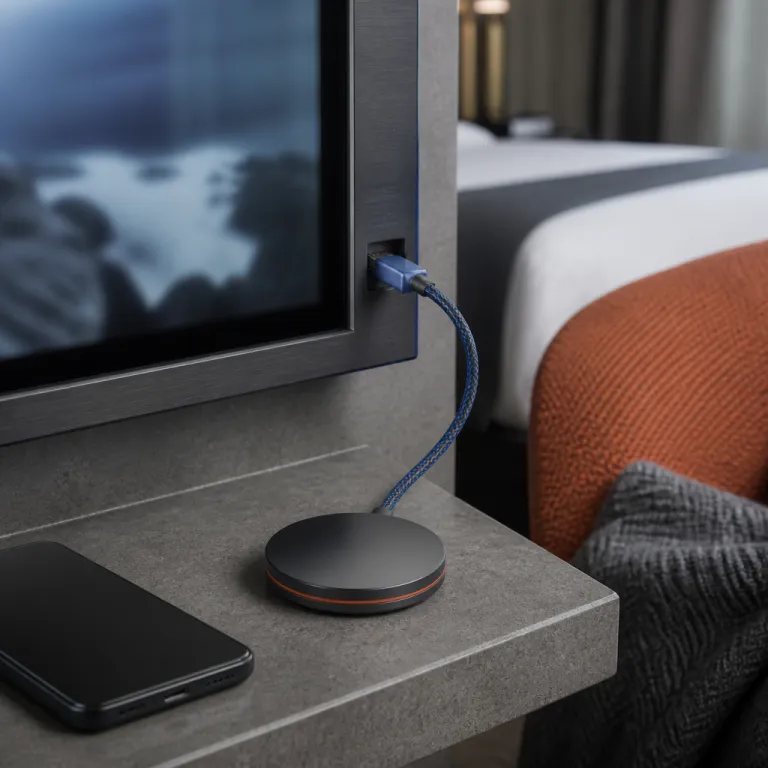
Hotel room casting as the new backbone of smart room entertainment
Hotel room casting has moved from nice to have to core infrastructure. For any modern hotel, the ability to let each guest cast their own content to the in room screen now defines what feels like a premium stay. This shift is reshaping how IT directors, innovation leaders, and travel tech startups architect room entertainment and hospitality tvs.
At its simplest, hotel room casting is the technology that allows a guest to stream content from a personal device to the hotel room television. In practice, these casting systems sit at the intersection of network design, cybersecurity, IPTV, and data governance, and they must support casting at scale across hundreds of rooms. When guests cast from their phone to the large screen, they expect the same frictionless streaming services and streaming platforms they use at home, without any visible complexity.
For hotel management, the business case is now clear because guests preferring streaming over pay-per-view represent 71 % according to the 2023 State of Hotel Guest Tech Report by HotelTechReport (based on a survey of more than 7,000 travelers and hoteliers). That single data point explains why traditional pay per view entertainment revenues are declining while guest satisfaction scores rise when hotels deploy robust casting solutions. Hotel room casting therefore becomes less a gadget and more a strategic response to evolving guest experience expectations in global hospitality.
Architecting secure casting systems around Chromecast and hospitality tvs
Behind the apparent simplicity of a “cast” button, a sophisticated architecture orchestrates every hotel casting session. Most casting hotels now standardize on a Chromecast device or similar hardware, tightly integrated with hospitality tvs and segmented Wi Fi networks. This stack must isolate each hotel room so that guests casting in one room can never see another guest’s device or screen.
Technology providers typically combine Chromecast enabled devices, smart tvs, and secure VLAN based networks to build scalable casting systems. The goal is to support casting from any personal phone, tablet, or laptop while enforcing strict identity and access controls for every device and every stream content session. For IT leaders evaluating why Chromecast powered casting is becoming the new standard for hotel entertainment, the focus is less on the gadget and more on the maturity of the casting solution ecosystem around it, as illustrated by deployments in brands such as Marriott, Hilton, and Accor that now reference casting in their smart room programs.
Security by design is non negotiable because hotel room casting touches both network and privacy risk. Guests must be able to watch favorite shows on the big screen without leaving any personal streaming services credentials behind at check out. When a guest experience relies on trust, the casting solution must enforce automatic session termination, credential token isolation, and zero data persistence on the tvs.
From IPTV to intelligent room entertainment platforms
Legacy IPTV deployments in hotels were built around centrally managed channels and pay per view libraries. Hotel room casting inverts this logic by turning the guest’s own phone into the primary entertainment controller and the hotel room screen into a neutral display. This change forces IT teams to rethink how they design room entertainment and how they invest in hospitality tvs.
Instead of pushing pre defined content, casting solutions enable guests to stream content from their preferred streaming platforms, whether that is Netflix, YouTube, or regional services. The hotel’s role shifts to providing robust casting systems, bandwidth, and a secure environment that can support casting for every guest simultaneously. For many innovation leaders, an intelligent hotel tv distribution system is now the foundation on which they layer casting, screen mirroring, and interactive services.
Vendors are responding with platforms that unify IPTV, hotel casting, and digital signage into a single management console. This allows hotel management to monitor device health, track guest satisfaction metrics linked to room entertainment, and orchestrate content across all tvs without compromising privacy. The result is a more flexible infrastructure where guests cast personal entertainment while the hotel still retains control over brand messaging and emergency information.
Designing frictionless guest journeys for casting in every hotel room
Even the most advanced casting systems fail if the guest journey is confusing. A modern hotel must design the casting experience so that a first time guest can connect a personal device and cast within seconds, without reading a manual. Every extra step between the phone and the screen erodes guest satisfaction and increases support calls.
Best in class casting hotels now use clear on screen instructions, QR codes, and contextual prompts on hospitality tvs to guide guests casting from their streaming services. The process usually starts with the guest connecting to the secure hotel Wi Fi, scanning a unique room QR code, and then selecting the cast icon inside a streaming app to stream content. When this flow works, guests cast naturally, watch favorite series or sports, and rarely call the front desk for help.
From an operational standpoint, IT directors should treat hotel room casting as a critical path in the digital guest experience. Monitoring tools must track failed cast attempts, device connectivity issues, and room entertainment uptime as rigorously as they track Wi Fi performance. A simple checklist for operations teams includes: verifying that each tv displays the correct room pairing code, confirming that VLAN segmentation prevents cross room discovery, and testing a full cast and disconnect cycle after every major network change.
AI, data, and the next generation of personalized room entertainment
Artificial intelligence is quietly transforming how hotels operate casting systems and interpret guest behavior. By aggregating anonymized data on which streaming platforms guests cast most frequently, hotel management can optimize bandwidth allocation and negotiate better peering or content delivery arrangements. AI models can also detect anomalies in casting systems, such as unusual device patterns that might indicate misuse or security issues.
For innovation teams, the real opportunity lies in connecting hotel room casting data with broader guest experience analytics. When a guest consistently uses specific streaming services or prefers screen mirroring from a laptop, that behavior can inform personalized offers, room entertainment presets, or even upsell strategies at check in through AI driven upsell journeys that feel natural rather than intrusive. Crucially, this must be done with strict respect for privacy, using aggregated patterns rather than individual viewing histories.
On the operational side, AI can help predict which rooms or devices are likely to fail based on historical casting solution telemetry. This allows technology providers and hotel IT teams to schedule proactive maintenance, reducing downtime and protecting guest satisfaction scores. As casting solutions mature, expect AI to play a growing role in dynamic bandwidth management, automated troubleshooting, and real time optimization of the overall hotel casting environment.
Implementation playbook for IT leaders and travel tech innovators
Rolling out hotel room casting across a portfolio of hotels is a multi phase technology implementation. IT directors should start with a clear baseline of existing tvs, network capacity, and in room wiring to determine whether to retrofit with a Chromecast device or migrate to new hospitality tvs with built in casting systems. A pilot in a limited number of hotel room types allows teams to validate both technical performance and guest experience before scaling.
Key design decisions include whether to centralize casting solution management in the cloud, how to segment Wi Fi networks, and how to integrate with property management and identity systems. Technology providers, hospitality consultants, and network security firms often collaborate to ensure that guests casting from any personal phone or tablet can do so securely, while hotel staff retain the ability to support casting without accessing private content. A practical pilot playbook typically defines 3 to 5 test properties, success metrics such as cast adoption rate and support ticket volume, and a 60 to 90 day evaluation window before committing to full rollout.
From a financial perspective, investors and CTOs should evaluate casting solutions not only on hardware cost but on total cost of ownership and impact on guest satisfaction. When guests can stream content easily, they are more likely to rate the overall guest experience highly and to perceive the property as a truly modern hotel. Over time, this perception supports higher average daily rates and loyalty, turning hotel casting from a pure cost center into a contributor to long term revenue and brand equity.
Strategic opportunities for startups, software vendors, and investors
Hotel room casting opens a wide field of innovation for startups and software publishers. Beyond the core casting systems, there is demand for orchestration layers that unify device management, analytics, and guest facing interfaces across multiple hotels and brands. Investors looking at travel tech portfolios increasingly view robust hotel casting capabilities as a signal of operational maturity and guest centric design.
Software vendors can differentiate by building casting solutions that integrate with AI driven upsell engines, digital concierge tools, and intelligent tv distribution platforms, creating a cohesive digital hospitality stack. For example, a system that understands when a guest is actively engaged in room entertainment should avoid interruptive notifications while still enabling subtle prompts for services that complement the current experience. This type of context aware orchestration turns the hotel room screen into a dynamic but respectful touchpoint rather than a static billboard.
For startups, the most promising niches sit around analytics, security, and interoperability between different casting hotels and hardware generations. Products that simplify support casting across mixed fleets of tvs and devices, while maintaining strict privacy and compliance, will find receptive IT teams. As the market matures, the winners will be those who treat casting not as a standalone gadget but as a foundational layer of digital hospitality, tightly woven into every aspect of the guest journey and the hotel’s technology strategy.
Key figures shaping the future of hotel room casting
- Guests preferring streaming over pay per view now represent 71 % according to the 2023 State of Hotel Guest Tech Report, which explains the rapid shift from legacy video on demand to hotel room casting as the default standard.
- In many global chains, internal data shared in earnings calls and investor presentations indicates that properties with robust casting systems report several points higher guest satisfaction scores compared with sister hotels that still rely only on linear tvs and basic room entertainment.
- Network audits in large urban hotels often reveal that streaming services and streaming platforms already account for the majority of in room bandwidth consumption, reinforcing the need for optimized casting solutions and intelligent traffic management.
- Technology implementation roadmaps from major hospitality groups indicate that hotel casting is expected to become a standard feature across most new build and renovation projects, aligning with the broader rise of IoT and smart room ecosystems.
FAQ about hotel room casting and smart room entertainment
What is hotel room casting ?
What is hotel room casting? Technology allowing guests to stream personal content to in-room TVs. In operational terms, this means a guest can use a personal phone, tablet, or laptop to cast or mirror content securely to the hotel room screen without logging into apps on the tv itself. The hotel provides the casting systems, secure network, and hospitality tvs, while the guest brings the streaming services and preferences.
How does hotel casting enhance the guest experience ?
How does hotel casting enhance guest experience? Provides personalized entertainment similar to home. When guests cast from their own devices, they can watch favorite series, films, or sports on a large screen instead of a small phone, which significantly improves perceived room entertainment quality. This familiarity and control over content directly supports higher guest satisfaction and a more relaxed stay.
Are all hotels offering casting services today ?
Are all hotels offering casting services? Increasingly common, but not universal. Many modern hotel brands and tech forward independents now treat a robust casting solution as a must have, while some older properties still rely on traditional tvs and limited entertainment options. For frequent travelers, checking whether a hotel supports casting before booking is becoming as common as checking Wi Fi quality.
Is hotel casting secure for personal devices and accounts ?
Is hotel casting secure? Yes, when implemented with secure networks. Well designed casting systems isolate each hotel room, prevent cross room visibility of devices, and automatically clear any association between the tv and the guest’s phone at check out. Guests should still verify that the hotel uses recognized technology providers and does not require entering streaming services passwords directly on shared tvs.
Do guests need special apps to use hotel room casting ?
Do I need special apps for hotel casting? No, standard streaming apps are compatible. In most cases, guests simply connect to the hotel Wi Fi, open their usual streaming platforms on a personal device, and tap the cast icon to send content to the room tv. Only in rare edge cases, such as corporate devices with strict security policies, might additional configuration be required.
Suggested further reading : AI for Travel on AI driven upsell at check in, AI for Travel on why Chromecast powered casting is becoming the new standard for hotel entertainment, and AI for Travel on how an intelligent hotel tv distribution system is reshaping in room entertainment strategy.
