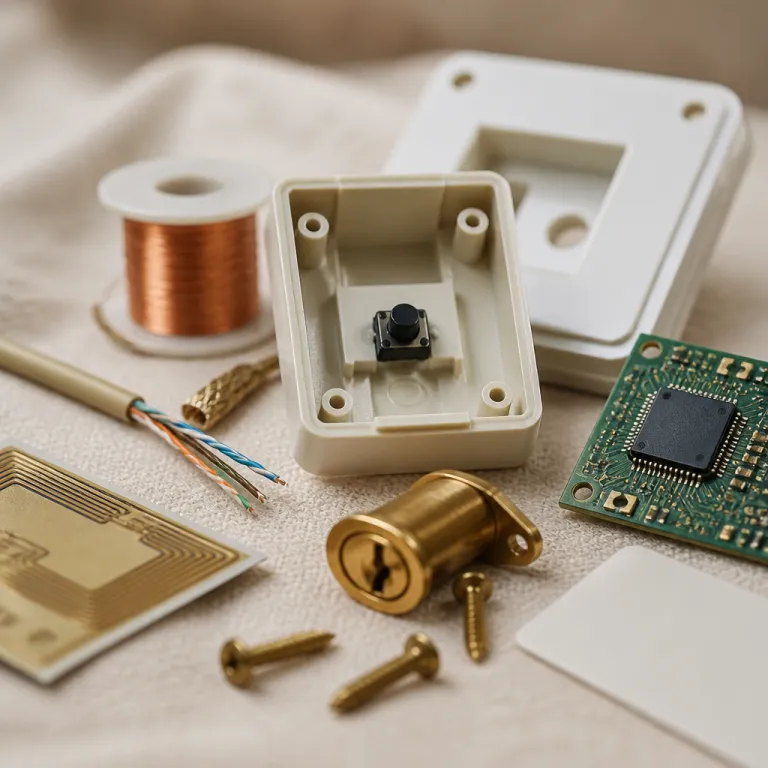
Hotel panic buttons: IT governance, safety, and compliance for modern hospitality
Why the hotel panic button now sits on the CIO’s agenda
For hotel employers, the hotel panic button has moved from an HR initiative to a core IT governance and risk management issue. As harassment cases involving hotel employees gained visibility, regulators in multiple United States cities translated employee safety into explicit legal requirements for panic devices in hotels. In Chicago, for example, a 2017 city ordinance requires hotels to provide panic buttons to certain staff, while New Jersey’s 2019 panic device law mandates similar protections for hotel workers in larger properties. These legal references are sourced from the City of Chicago’s “Hotel Workers Sexual Harassment Ordinance” (2017) and New Jersey’s “Panic Device for Hotel Employees” law (P.L.2019, c.238). This shift forces technology leaders to treat every panic button as a connected security device that must align with corporate risk, data, and event management frameworks.
Hospitality industry executives can no longer see panic buttons as isolated gadgets, because each device generates real time alerts, location data, and audit trails that fall under information security and privacy obligations. When a hotel panic button is pressed by hotel staff or lone workers, the resulting response must be orchestrated like any other critical incident, with clear runbooks, defined response times, and traceable actions. That means IT management, physical security, and operations must jointly design solutions where personal safety, cyber security, and legal compliance reinforce each other rather than collide.
Major hotel chains that signed the AHLA 5 Star Promise illustrate this convergence, as their hotel panic solutions now integrate with property management systems, staff communication platforms, and security operations centers. The AHLA 5 Star Promise, a documented industry commitment by the American Hotel & Lodging Association, explicitly calls for employee safety devices and enhanced training. For hotel CIOs and CTOs, the governance question is no longer whether to deploy panic buttons, but how to standardize button hardware, software, and data flows across diverse hotels. The hospitality industry is discovering that a simple wearable panic device can become the trigger for a fully governed, cross departmental safety and service response architecture that connects with other hospitality technology such as guest messaging and internal ticketing tools.
From wearable panic devices to secure platforms: panic button architecture choices that matter
Behind every apparently easy panic button clipped to a uniform sits a complex architecture that IT leaders must control. Hotel employees in housekeeping, room service, and maintenance now carry wearable panic devices that rely on BLE beacons, Wi Fi, or cellular networks to transmit a button panic alert with precise location. Each hotel panic implementation therefore becomes a distributed IoT system where device security, network segmentation, and identity management are as critical as physical safety.
Vendors such as React Mobile, ROAR for Good, and TraknProtect typically propose panic buttons and management consoles that promise easy integration with existing hotel systems, but CIOs must validate these claims through rigorous architecture reviews. A hotel panic button solution that sends real time alerts to security personnel is valuable only if its APIs, encryption, and authentication align with the group’s IT governance and zero trust strategy. At a minimum, many security teams now expect TLS 1.3 for data in transit, signed firmware, and a defined firmware update cadence. When hundreds of buttons and panic devices are deployed across multiple hotels, weak onboarding, shared credentials, or unpatched firmware can quietly undermine both employee safety and cyber resilience.
Forward looking hotel employers now treat the panic button platform as part of their broader hospitality technology stack, alongside contactless payment and guest facing systems. The same discipline applied to secure contactless payment in Paris hotels should guide the selection of secure panic button solutions, from data residency to incident logging. A simple vendor onboarding checklist often covers identity integration (SSO, role based access control), log export to SIEM, and support for regular penetration testing. For innovation leaders, the opportunity lies in building a unified safety and service layer where hotel staff alerts, guest requests, and event management workflows share a consistent, governed architecture.
Designing AI assisted response for hotel staff safety
Once a hotel panic button is deployed, the next strategic question is how to orchestrate fast response without overwhelming security teams. A simple button press by a lone worker in a remote corridor should trigger an intelligent chain of actions, not just a noisy alert on a crowded dashboard. Artificial intelligence can help hotel management prioritize incidents, route alerts, and predict where additional staff or security presence is needed.
Modern hospitality platforms already use AI to optimize room service routing and maintenance scheduling, and the same engines can enhance employee safety workflows. When multiple panic buttons are activated in different hotels, AI driven event management can cluster alerts, correlate them with occupancy, and propose the best response based on historical patterns and current staffing. This transforms each panic device from a one way alarm into a node in a learning system that continuously improves response times and reduces false positives.
For hotel employees, the visible part remains an easy wearable panic device with a single button that they trust will bring help quickly. Behind the scenes, AI models can adjust escalation paths in real time, for example sending a fast response to the nearest trained employee while simultaneously notifying central security. Over time, this data driven approach allows hotel employers to refine training, adjust lone worker policies, and demonstrate measurable gains in personal safety to regulators and investors. These AI enabled response patterns are editorial recommendations based on current hospitality technology practices rather than specific legal mandates.
IT governance, compliance, and the ethics of employee safety data
Deploying a hotel panic button system creates a new category of sensitive data that IT governance must address explicitly. Every time hotel staff press panic buttons, the platform records who activated the device, where they were, and how long the response took, which can reveal patterns about lone workers and vulnerable zones. These datasets are invaluable for improving security and safety, but they also raise questions about surveillance, retention periods, and employee trust.
Robust governance starts with clear policies that separate personal safety objectives from performance monitoring, so employees understand that the panic button exists to help, not to track productivity. Legal and HR teams should work with IT management to define how long panic event logs are stored, who can access them, and under which conditions they can be shared with law enforcement or insurers. Transparent communication with hotel employees, backed by written policies, is essential to maintain confidence in the system and encourage consistent use of panic devices.
Compliance obligations are also evolving as more United States jurisdictions mandate panic buttons for hotel workers, often specifying technical and procedural requirements. In addition to Chicago and New Jersey, states such as Washington have adopted hotel employee safety laws that reference panic devices and response standards. These legal developments are based on publicly available state and city statutes, while the implementation guidance here is editorial. CIOs must therefore treat hotel panic solutions as regulated safety systems, subject to regular audits, penetration tests, and vendor risk assessments. When governance is strong, the hotel panic button becomes both a shield for employees and a demonstrable proof point of the group’s commitment to ethical, data driven security.
Operational integration: from isolated buttons to orchestrated service
Many early deployments treated each hotel panic button as a standalone device, but mature programs embed them deeply into daily operations. When a hotel employee in room service presses a panic button, the alert should appear not only in the security control room but also in relevant operational tools used by supervisors. This requires easy integration between panic devices, staff communication apps, and property management systems, so that response becomes a coordinated team effort.
Some hotel employers now route panic alerts through the same platforms that handle guest requests, maintenance tickets, and event management tasks. In such architectures, a button panic event can automatically create a high priority incident, assign nearby employees, and update status in real time as responders move through the property. This approach leverages existing workflows and reduces training friction, because hotel staff interact with familiar interfaces rather than a separate, rarely used console.
Strategic integration also opens the door to richer analytics that connect employee safety with service quality and operational efficiency. For example, correlating panic button activations with room service delivery routes can highlight blind spots, poorly lit corridors, or staffing gaps that affect both safety and guest experience. A midscale urban hotel, for instance, might discover that 40 % of panic alerts occur on two specific floors during late shifts, prompting targeted lighting upgrades, additional cameras, and revised patrol routes. Linking safety data with advanced hospitality television distribution systems and other in room technologies, as explored in specialized hospitality tech analyses and internal best practice guides, helps IT leaders design properties where digital infrastructure supports both protection and premium service.
Measuring ROI and resilience of hotel panic solutions
For investors and CTOs, the business case for a hotel panic button program must extend beyond regulatory compliance. Direct financial ROI is difficult to quantify, but reductions in incidents, legal exposure, and staff turnover create tangible long term value for hotels. In Chicago, for example, a Unite Here Local 1 survey reported that 58 % of hotel workers had experienced sexual harassment, a figure that underlines both human and financial risk. This statistic is sourced from Unite Here Local 1’s published survey of Chicago hotel workers. A hotel group that deploys panic devices, trains staff, and improves response processes can track declines in reported incidents and related claims over several years as part of its ROI narrative.
To manage this risk, hotel management teams track KPIs such as average response times, number of panic button activations per 1 000 shifts, and percentage of lone workers equipped with wearable panic devices. These metrics, combined with qualitative feedback from hotel employees, allow leaders to refine training, adjust staffing, and optimize device placement across properties. Over several years, consistent data can demonstrate how hotel panic solutions contribute to fewer severe incidents, lower insurance premiums, and higher employee safety scores in engagement surveys.
Resilience is the other side of the equation, because a panic button that fails during a crisis undermines trust instantly. IT governance frameworks should therefore include regular testing of buttons, redundancy for communication networks, and clear fallbacks when systems are degraded. A typical reference architecture might use encrypted BLE from the wearable to gateways, TLS 1.2 or higher for data in transit to the cloud platform (with TLS 1.3 as the preferred baseline), role based access control on APIs, and automated failover to cellular networks if Wi Fi is unavailable. A simple internal vendor comparison table can capture whether each provider supports these controls, offers 24/7 monitoring, and commits to defined service levels. When technology providers, hotel employers, and security personnel collaborate on these resilience plans, the hospitality industry can treat the hotel panic button not as a checkbox, but as a cornerstone of a modern, data informed safety culture.
Key statistics on hotel panic buttons and employee safety
- In Chicago, 58 % of hotel workers reported experiencing sexual harassment, according to a Unite Here Local 1 survey, which strongly supports the need for hotel panic button programs. This figure is a sourced statistic from the union’s published research.
- Between 2006 and 2016, 818 incidents of sexual harassment were reported by hotel workers in one Reveal investigative report, highlighting the scale of risk that panic devices aim to mitigate. This number is drawn from Reveal’s documented analysis of harassment claims.
- Since the launch of the AHLA 5 Star Promise, major hotel brands in the United States have progressively equipped hotel staff with wearable panic devices, aligning with growing legislative mandates for employee safety technologies. This trend is based on AHLA’s public statements and brand announcements.
- Ongoing regulations in multiple United States states and cities now require hotels to provide panic buttons to employees working alone, especially housekeeping and room service teams, making compliance a core IT and security governance priority. These regulatory references are sourced from city ordinances and state level hotel employee safety laws, while the governance recommendations here are editorial guidance.
FAQ about hotel panic buttons and governance
What is a hotel panic button?
A hotel panic button is a wearable device allowing hotel staff to alert security in emergencies. In practice, hotel employees such as housekeeping or room service press the button to send a real time distress signal with their location. The alert reaches designated responders, who can then provide fast response and document the incident.
Why are panic buttons important in hotels?
They protect staff from harassment and ensure quick emergency responses. For hotel employers, panic buttons also demonstrate a concrete commitment to employee safety and personal safety, which supports retention and brand reputation. In many jurisdictions, these devices now form part of mandatory safety measures for hotels, as illustrated by the Chicago and New Jersey laws cited earlier.
Are hotels required to provide panic buttons?
Many states and cities have laws mandating panic buttons for hotel staff. These regulations typically focus on lone workers such as housekeepers, who are more exposed to risk when working in guest rooms. Compliance requires not only distributing devices, but also training employees and maintaining reliable response processes that align with internal IT governance and security policies.
How do hotel panic buttons work?
Staff press the button to send an alert with their location to security. The device usually connects via wireless networks to a central platform that displays the exact position of the employee and the time of activation. Security personnel or trained responders then follow predefined procedures to reach the employee and resolve the situation, with all steps logged for audit and continuous improvement.
Which hotels have implemented panic buttons?
Many major hotel chains have adopted panic buttons following safety initiatives. These hotels often integrate panic button platforms with broader security and event management systems to coordinate response across large properties. Smaller independent hotels are increasingly following the same path, driven by both regulation and expectations from workers and guests, and by internal benchmarks that track safety performance across the hospitality portfolio.
