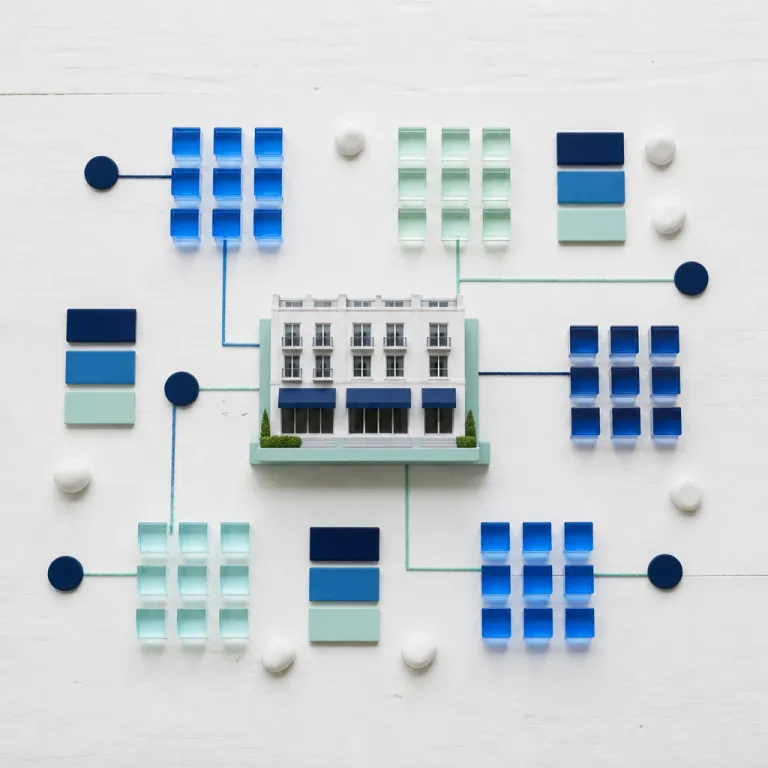
MCP protocol hotel distribution as the new access layer for AI agents
MCP protocol hotel distribution is not just another sales channel; it is an access layer for agentic AI. When a guest asks an AI assistant for a hotel near Southlake with flexible check-in, the agent increasingly expects to query structured data from a compliant MCP server in real time rather than scrape content or simulate a booking flow. In this emerging model, hotels that expose clean rates, availability, and policies through a standard protocol remain visible to assistants, while properties that do not risk fading from the distribution graph.
Model Context Protocol, or MCP, defines how an AI model requests context from external systems and how those systems respond with structured data that the model can reason over. In MCP protocol hotel distribution, the AI agent behaves like a meta booking engine that orchestrates calls to hotel systems, CRS platforms, and PMS–CRS stacks through one coherent context protocol instead of brittle screen scraping. The specification describes how model context is passed, how the MCP server authenticates, and how hotel booking responses are normalized so that different hotels and systems can be compared in real time.
For hospitality executives, the analogy is blunt and useful. MCP protocol hotel distribution is to AI assistants what the OTA extranet was to online travel when Booking.com and Expedia-style flows first hit scale, because the discovery layer has shifted from a human reading content to a system parsing signals. The question is no longer whether a guest sees your hotel on a web page, but whether a network of MCP servers can return your rates, availability, policies, and room types in a machine-readable format that leading conversational agents can trust.
AI-driven hotel booking flows already exist in production, not just in demos. Early case studies from vendors working on MCP-aligned integrations, such as AI-native booking copilots and CRS providers experimenting with model-context APIs, indicate that hotels can see meaningful growth in AI-originated bookings when the protocol is implemented correctly across CRS, PMS, and booking engines. In parallel, large distribution platforms are beginning to expose inventory and rates from extensive hotel portfolios to AI booking channels via MCP-style interfaces, which turns the protocol from a theoretical model into a concrete distribution rail.
When experts say that MCP standardizes AI integration in hotel bookings, they are pointing to a deep architectural shift rather than a cosmetic API. The headline answer that “MCP standardizes AI integration in hotel bookings” captures the essence, but the operational impact sits in how your CRS, PMS–CRS bridge, and booking engine expose data to the protocol. Once your hotel technology stack can speak MCP fluently, any compliant AI assistant can request direct booking options, compare them against OTA offers, and execute a reservation without ever touching your legacy web forms.
That shift makes MCP protocol hotel distribution a strategic decision for every hotel CTO and innovation lead. Some providers position their MCP capabilities as a way to improve booking efficiency and data accuracy, while others frame MCP as the connective tissue between hotels and AI booking channels. Both perspectives converge on the same thesis: the hotel that controls its MCP access layer will influence how artificial intelligence perceives its value, its rates, and its availability in real time.
From OTA extranets to AI assistants: how MCP rewires hotel distribution
Two decades ago, the OTA extranet became the de facto interface between hotels and online demand. Revenue managers typed rates and restrictions into web-based systems, and those systems pushed data to consumer-facing booking flows that humans navigated manually. MCP protocol hotel distribution replaces that human-centric layer with AI assistants that negotiate, filter, and confirm bookings on behalf of the guest, using structured data pulled directly from hotel systems.
In this new environment, the guest no longer compares ten browser tabs of OTA and brand.com offers. Instead, a conversational agent queries multiple MCP servers, evaluates rates, availability, cancellation policies, and loyalty benefits, then proposes a short list of hotels that match the guest profile and constraints. The booking MCP call becomes the atomic operation, and the context protocol ensures that every hotel response is normalized so the model can reason about trade-offs in real time.
For IT directors, this means that distribution strategy becomes a data modeling problem as much as a channel management problem. Your CRS and PMS–CRS integration must expose room types, rate plans, and inventory as structured data that aligns with the MCP schema, not just as free-text descriptions. If your hotel technology stack cannot provide machine-readable amenities, policy rules, and fees, the AI model context will be incomplete, and your property will lose in the ranking when assistants optimize for total stay value rather than headline rates.
Messaging channels illustrate how quickly this shift can become operational. Hotels that turned WhatsApp into a concierge channel saw measurable gains in response time, containment rate, and guest satisfaction, as documented in analyses of guest messaging performance data. MCP protocol hotel distribution extends the same logic to pre-stay and booking; instead of a human agent reading a message, an AI assistant reads the guest intent, calls the MCP server, and confirms a reservation with the right rate and policy in seconds.
There is also a subtle but critical change in how hotels appear in the discovery funnel. In the OTA era, content quality, photos, and review scores shaped visibility, while the underlying systems were mostly invisible to the guest. In the MCP era, the quality of your data, the latency of your server, and the completeness of your model context become ranking factors for AI assistants, because the protocol rewards hotels that can answer complex queries in real time with precise, structured data.
Hospitality leaders should treat MCP protocol hotel distribution as a new form of direct distribution rather than a niche technical experiment. When an AI assistant can access your inventory through a well-designed access layer, it can prioritize direct booking paths that reduce commission leakage and maintain control over guest data. Conversely, if your hotel relies only on legacy channels, intermediaries that aggregate MCP endpoints may become the new OTAs, owning the relationship with AI agents while you become a silent supplier behind their branded assistants.
What your stack must expose: structured data, model context, and MCP servers
To participate meaningfully in MCP protocol hotel distribution, your stack must expose more than basic rates and availability. AI assistants need a full model context that includes room attributes, amenity details, policy rules, and even operational constraints such as housekeeping cut-off times or late check-out capacity. Without that depth of data, the model cannot optimize for the guest experience, and your hotel will be filtered out when assistants search for the best fit rather than the cheapest rate.
Start with the core: your CRS and PMS–CRS bridge must publish rates, availability, inventory, and restrictions as structured data that aligns with the MCP schema. That means every rate plan, from advance purchase to corporate negotiated, needs explicit fields for cancellation windows, payment terms, and inclusions, not just narrative descriptions. Your booking engine should then expose these same elements through an MCP-compliant access layer so that a booking MCP call can execute a reservation with the same fidelity as a human using your website.
Next, extend the model context beyond pure pricing. Hotel systems should surface room-level attributes such as bed configuration, view type, workspace quality, and accessibility features in a machine-readable format that AI assistants can parse. When a guest asks for a quiet room with a large desk and strong Wi‑Fi, the MCP server should respond with real-time options that match those constraints, rather than forcing the model to guess from marketing copy or outdated content.
Data architecture choices matter here, and hospitality leaders can borrow lessons from property sync platforms that already rationalize complex real estate data flows. Analyses of how property sync platforms redefine data flows for hospitality leaders show that a clean canonical model reduces integration friction and improves downstream analytics. MCP protocol hotel distribution applies the same principle: a well-designed canonical model for hotel data makes it easier for multiple AI assistants to consume your MCP endpoint without bespoke mappings for each platform.
On the infrastructure side, MCP servers must be treated as production-critical components of your hotel technology stack. They sit between your internal systems and external AI platforms, enforcing authentication, rate limits, and data quality checks before any response reaches an assistant. For multi-property hotels, a cluster of MCP servers can aggregate data from different hotel systems and present a unified interface to AI agents, ensuring consistent behavior across brands and regions.
To make this concrete, consider a minimal MCP-style response for a simple availability query, along with a basic schema mapping:
{

  "hotel_id": "SLK123",

  "check_in": "2026-07-10",

  "check_out": "2026-07-12",

  "rooms": [{

    "room_type": "KING_DELUXE",

    "attributes": {"view": "lake", "workspace": "large_desk", "wifi": "premium,

    "rate_plans": [{

      "code": "FLEX",

      "currency": "USD",

      "nightly_rate": 220.00,

      "cancellation_policy": {"deadline_hours": 24, "penalty_nights": 1}

    }]

  }]

}
In a typical mapping, room_type links to your CRS room code table, attributes map to PMS room features, and rate_plans reference your revenue management system’s rate identifiers, while cancellation_policy is derived from policy rules stored in the booking engine. Finally, think about observability and governance as first-class requirements. Every MCP protocol hotel distribution call should be logged with full context: which assistant requested what, which data sources were used, and which hotel booking options were returned or rejected. A practical observability checklist includes request and response logging, latency and error dashboards, schema validation alerts, and periodic audits of ranking outcomes, so IT directors can tune their structured data and negotiate more effectively with intermediaries that might be aggregating MCP endpoints into new distribution platforms.
Intermediary risk and the build versus buy decision for MCP distribution
As MCP protocol hotel distribution matures, the strategic question is not whether AI agents will book hotels, but who will own the interface between those agents and your inventory. Platforms that specialize in AI-driven hotel distribution already position themselves as the MCP layer that connects hotels to conversational booking channels, which creates both an opportunity and a new form of intermediary risk. If you outsource everything, you may find that the next generation of OTAs are not websites but MCP aggregators that sit between your hotel and every major assistant.
For CTOs, the build versus buy decision should start with a clear map of existing hotel systems and their API maturity. If your CRS, PMS–CRS bridge, and booking engine already expose robust APIs, building an internal access layer that speaks MCP may be feasible, especially for larger hotel groups with strong engineering teams. In that scenario, you can still partner with distribution platforms for reach, while retaining a direct MCP endpoint that major AI platforms can integrate for high-value direct booking flows.
Smaller hotels or regional groups may find that partnering with specialized providers is more realistic in the short term. Some vendors focus on AI-driven hotel distribution solutions, while others connect hotels to AI booking channels via MCP, reducing the integration burden on individual properties. In both singular and plural cases, these technology partners can accelerate your entry into MCP protocol hotel distribution, but they also shape how your data is modeled and how much visibility you have into agent behavior.
Whatever path you choose, you cannot treat MCP as a black box if you care about long-term distribution economics. You need transparency into how your structured data is transformed, how the model context is constructed, and how AI assistants rank your hotel against competitors in real time. This is where internal analytics capabilities, such as the kind of embedded business intelligence described in analyses of PMS native BI layers, become essential for monitoring MCP performance and optimizing your strategy.
Practical next steps for Q3 are clear and actionable for any hospitality technology leader. First, ensure MCP compatibility in hotel systems by auditing your APIs, data models, and latency, then prioritize the gaps that block MCP protocol hotel distribution. Second, train staff on MCP usage, not at the code level, but in terms of how rates, policies, and content changes propagate through the protocol to AI assistants and ultimately to guest-facing booking flows.
Third, monitor AI booking performance with the same rigor you apply to OTA production, using metrics such as conversion rate, average booking value, and share of direct booking versus mediated flows. As AI-driven hotel bookings grow, the hotels that treat MCP as a core part of their distribution infrastructure, rather than a side project, will capture the most value from artificial intelligence while keeping control over guest relationships. Those that delay risk waking up to find that AI assistants have built their own preferred lists of hotels, and that the protocol deciding who appears on those lists is controlled entirely by someone else.
Key figures and benchmarks for MCP protocol hotel distribution
- Industry reports and vendor disclosures suggest that hundreds of hotels are already experimenting with MCP-aligned integrations for AI-driven bookings, which signals that MCP protocol hotel distribution has moved beyond purely theoretical discussions.
- Early adopters that implemented MCP with specialized AI distribution partners have reported double-digit percentage increases in AI-originated bookings, indicating that structured data and standardized protocols can translate directly into incremental revenue, although exact uplift will vary by market and mix.
- Large connectivity providers now expose inventory and rates from extensive hotel portfolios to AI booking channels via MCP-style interfaces, positioning MCP servers as a potential global-scale distribution rail for hospitality as adoption grows.
- The MCP rollout timeline in hospitality shows that protocol concepts entered hotel bookings before many vendors publicly announced MCP enablement, illustrating a rapid adoption curve within a relatively short period.
- Implementation guidelines emphasize three operational priorities: ensure MCP compatibility in hotel systems, train staff on MCP usage, and monitor AI booking performance, which together define a practical roadmap for hotel CTOs.